
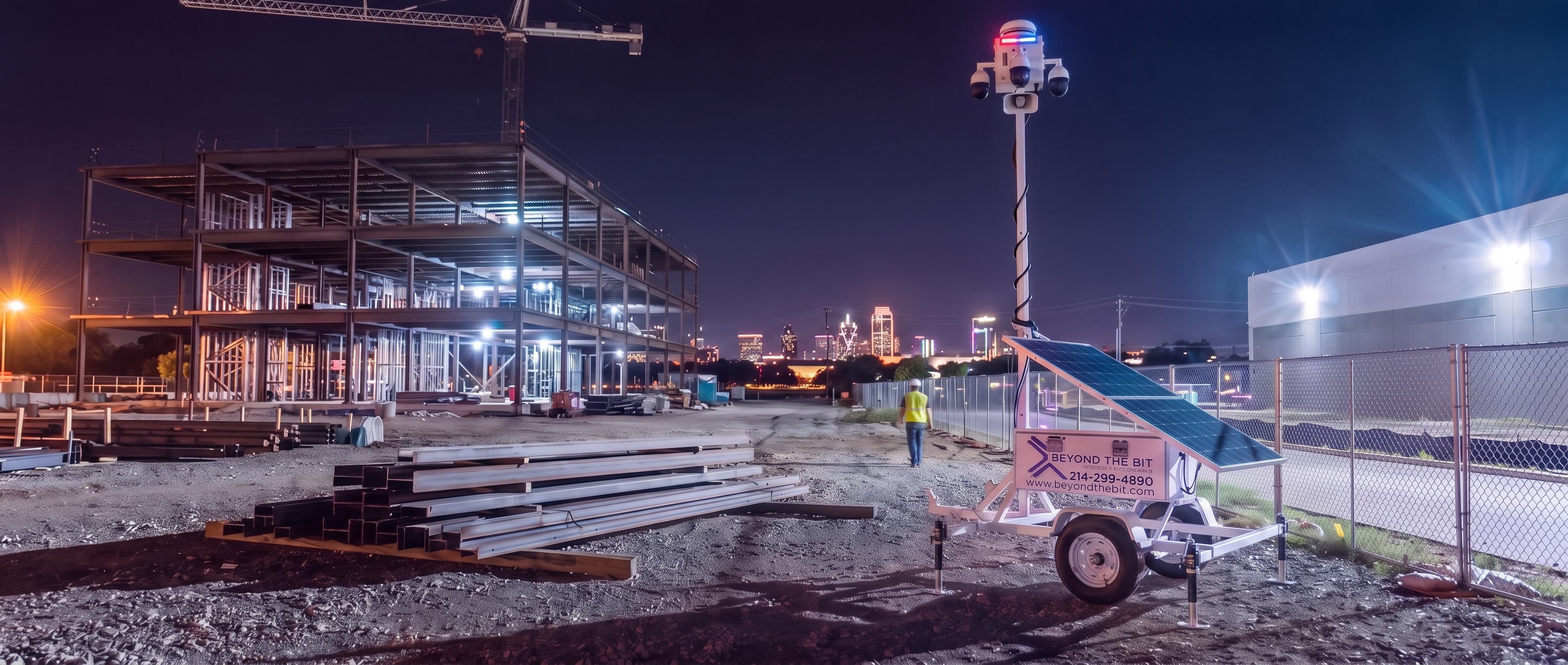
Service Area — Grayson County
Watched in
Sherman, Texas.
Sherman is fifty minutes straight up US-75 from our yard — a shorter run than most of the Fort Worth work we do, which surprises people who still file Grayson County under "out of town." What has changed up there is scale. A multi-fab semiconductor campus is being built north of the highway, census estimates put Sherman's population up better than a fifth since 2020, and an entire supporting economy of suppliers, contractor yards, housing and commercial work has followed it in. That is a lot of construction arriving at once in a county that was not built to watch it.
The megasite, the corridor, and everything being built to serve it
The semiconductor campus north of US-75 is the headline, and it is genuinely enormous — a multi-billion-dollar site publicly reported to be planned for several connected fabs, with one already in production and the next in fit-out. But the campus itself is not where most of our work is. Sites that size run their own security programmes and their own gates.
What the campus has produced is everything around it. Supplier and contractor facilities going up along the US-75 and SH-56 industrial corridor. Contractor laydown and equipment yards leased on ground that was pasture two years ago. Commercial build-out along FM 1417 and the west side. Housing at a pace Grayson County has not seen before, running north toward Denison and out toward Lake Texoma. Those are the sites with a temporary fence, a gravel laydown, and nobody on them between six in the evening and six in the morning — and they are carrying serious material, because they are on a schedule that a chip fab is waiting on.
A schedule nobody wants to slip is its own kind of exposure
There is a specific risk on supporting work for a very large project, and it is not really about the value of what gets stolen. It is about what a theft costs you in time. If a switchgear lineup or a run of feeder cable walks off a supplier's site on a Tuesday night, the replacement is not a trip to a supply house — it is a lead time, and the lead time lands on a schedule that has a fab commissioning date at the end of it. The material was worth a certain amount. The delay is worth considerably more, and it is the number that ends up in the meeting.
That changes the calculation on prevention. A camera that documents the loss gives you a claim and a police report. It does not give you back the six weeks. What actually helps is interrupting the attempt while somebody is still standing on the gravel deciding whether it is worth it — which is the whole reason our chain runs through a live operator rather than a recording. Motion analytics do the first pass and categorize what moved as a person, a vehicle or a bicycle. A person inside a zone that should be empty routes to an operator at our Texas-licensed monitoring partner, who looks at the actual video and makes the call. Software flags; a person decides. If it is real, the strobe fires and the operator speaks through the trailer's loudspeaker, describing the intruder and where they are standing.
What that looks like on a Grayson County site
A supplier facility off SH-56, structural steel up, roof half decked, switchgear and feeder cable delivered early and staged inside the fence because the building is not ready to take it. Gate chained. Nobody on site from six.
At 2:15 a.m. two people come through a section of fence at the back of the lot, away from the road, and walk toward the cable reels. The camera tags them as people the moment they cross into the material zone — not the deer that crossed the same ground an hour earlier, because deer are not what the analytics are looking for and the pasture behind the fence is masked out anyway.
An operator has live video before they reach the first reel. Strobe on. The speaker describes what they are wearing and which reel they are standing beside. That is usually the end of it. If it is not, the operator works your call list while the Grayson County Sheriff's Office gets a call backed by video of a burglary in progress rather than a panel that tripped — which is the difference between a report taken in the morning and a unit dispatched at the time.
Getting a trailer onto your Sherman site
Fifty minutes up US-75, which is close enough that Sherman gets Metroplex treatment: normal scheduling, no distance premium, the same 1–2 week deployment window from signed quote to a trailer on the ground. Service after delivery is a drive rather than a support queue — if a mast needs repositioning because a phase changed or a name needs adding to the call list before a long weekend, that is a morning, not a multi-day wait.
Our crew places the unit, raises the mast and aims the cameras with the monitoring center live on the call, then walks your site contact through the call list. Solar power and cellular data mean the trailer does not wait on the site's utilities — which matters on ground where permanent power is often months out. Multi-unit orders for a large laydown or a long perimeter stage on our own trucks; with a fleet of nearly 100 trailers, several units to one Grayson County site is a scheduling question rather than a supply one. W-9, certificate of insurance and net-30 terms are standard.
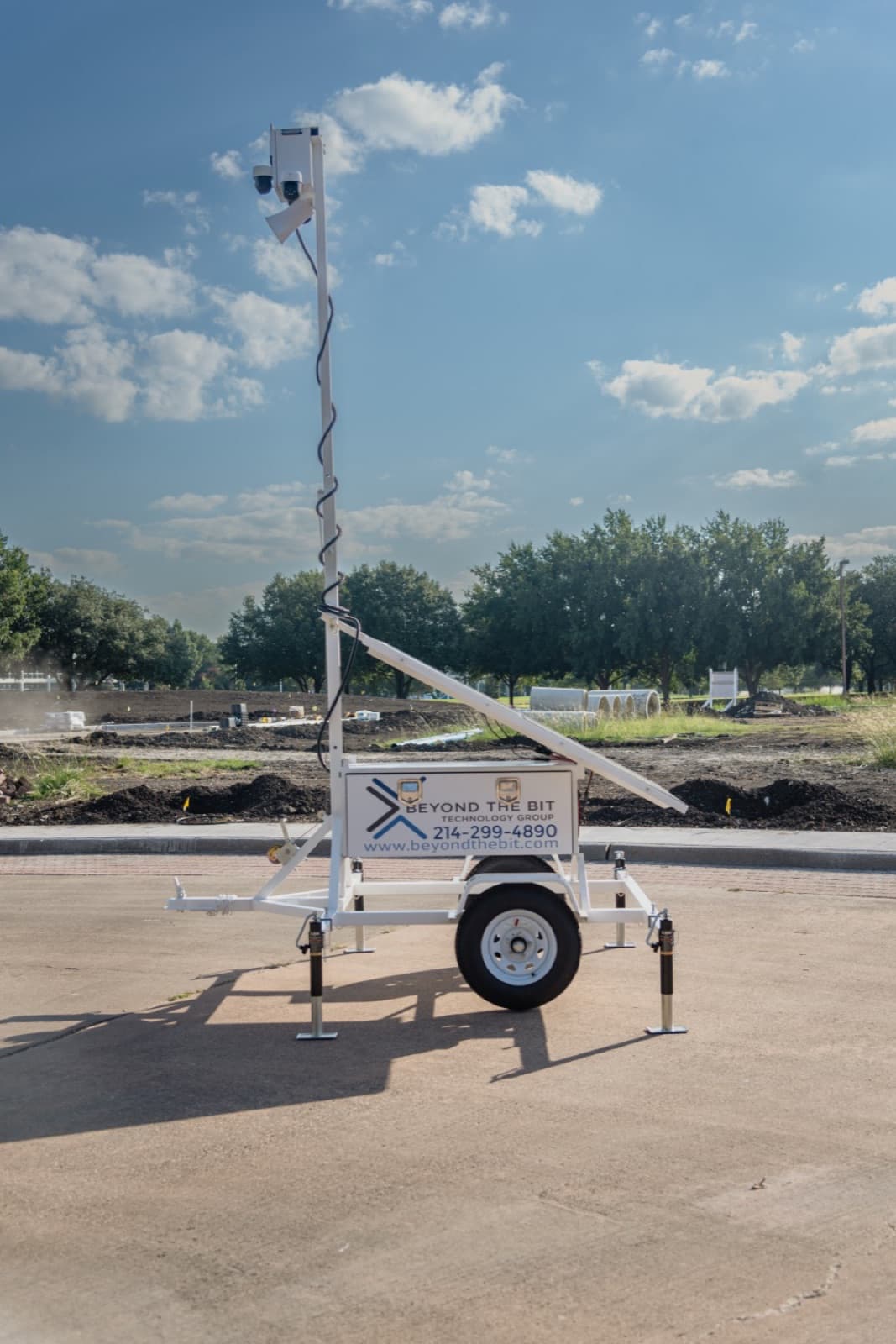
Field Photo — 2025 Deployment
Placed inside the perimeter fence with the mast head clear of the stacked material. Trades keep working around it; the unit does not need power, trenching or a foundation.
Plate 03 — On site, mast raised
Where These Trailers Work
Common Sherman deployments.
Watching a site in Sherman? Call 214-299-4890
Questions — Sherman
Asked before booking.
Is Sherman treated as a long-haul market?
No. Sherman is about fifty minutes from our Richardson yard, straight up US-75 — a shorter run than a far-west Fort Worth job — so it is scheduled, serviced and quoted as normal territory rather than as an out-of-region deployment. Same 1–2 week deployment window, same flat monthly structure, no distance surcharge, and in-person service instead of a phone queue.
Can a trailer work on a site with no permanent power or internet yet?
Yes, and that is the usual case on new industrial ground in Grayson County. The trailer carries its own solar panels and battery bank and connects over a cellular modem, so it does not need shore power, a generator, a fuel run, a site network or an IT ticket. It can be watching a laydown yard months before the building it is protecting has a service entrance, which is precisely the window when the most valuable material is sitting outside.
We are a supplier building near the megasite. Is our exposure different from a normal jobsite?
The material is similar; the consequence of losing it is not. Supporting work for a very large project runs against a schedule with a hard downstream date, so the real cost of a theft is usually the replacement lead time rather than the replacement price — long-lead electrical gear especially. That is the argument for a monitored trailer over a recording camera: documentation gives you a claim, but interrupting the attempt while somebody is still deciding whether to load the truck is what protects the programme date.
Ready to get a trailer on your Sherman site? Get a quote built around your actual site.
Request a Free Site Assessment