
Industry — Vacant Property
Vacant Property Security Cameras
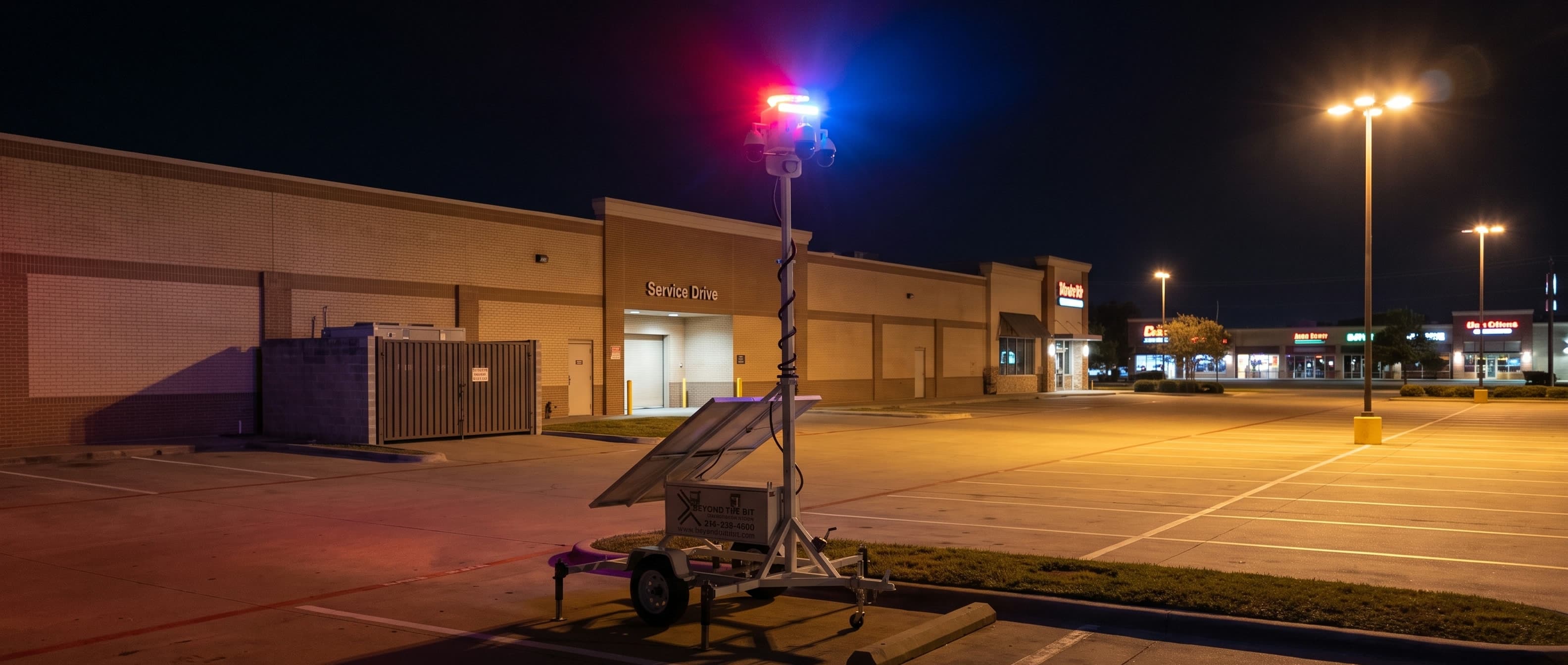
A vacant building has no one walking it at 6 a.m. to notice what changed overnight. That is the whole problem. Copper comes out of the walls, someone moves into the back office, a truck backs up to the lot and leaves a load of debris, and the owner finds out weeks later on a drive-by or a call from the city. A trailer in the lot puts somebody on the property every night without putting anybody on the payroll.
Exposure
What happens to a building nobody visits?
Vacancy loss is quiet and cumulative. Nothing about it announces itself, which is why the bill arrives all at once: a gutted mechanical room, an eviction filing, a dumping fine, an insurance carrier asking what protection was in place. The exposure is not one dramatic break-in. It is weeks of nobody looking.
Copper and HVAC stripped from empty buildings
Rooftop units and mechanical rooms are the first stop, because an empty building means nobody hears a saw running. A gutted RTU costs far more to replace than the scrap was worth, and it usually takes the roof penetration and the electrical with it.
Squatters and the eviction costs that follow
Once someone establishes occupancy, the problem stops being a security matter and becomes a legal one. Texas removal takes time and lawyers, and the property still has to be cleaned and repaired afterward. Catching the first night is far cheaper than litigating the third month.
Illegal dumping in unwatched lots
An empty lot with an open drive reads as free disposal. Tires, roofing tear-off, and household loads land overnight, and the property owner pays for haul-off. In many cities the code citation lands on the owner too, not on whoever dumped.
Arson and vandalism nobody reports for days
Broken glass and graffiti hurt the asset's value and signal that the property is unwatched, which invites more of the same. Fire is the version of this that ends the conversation about resale entirely.
Deployment
Where does the trailer go on an empty property?
The mast goes up where entry actually happens. That is usually the rear or side of the building where the mechanical pads sit and where nobody driving past can see, plus whatever drive gives vehicle access to the lot. Our crew walks the property before placement, because the front elevation that looks exposed from the street is rarely the side that gets hit.
Vacant properties are exactly where a self-contained unit earns its keep. Utilities are usually shut off, so there is no power to tap and no network to join. Solar panels and a battery box run the trailer, and it connects over cellular, which means it works on a building with the meter pulled.
Coverage moves when the asset does. A property that sells, leases, or goes into renovation does not need a trailer anymore, and the same unit can move to the next empty building in the portfolio. That is a scheduling call to our crew, not an install and a new contract.
Field Placement
Placed to cover the entrances and mechanical pads of a building nobody visits daily — the whole point is that no one is there to notice.
Field Photo — 2025 Deployment
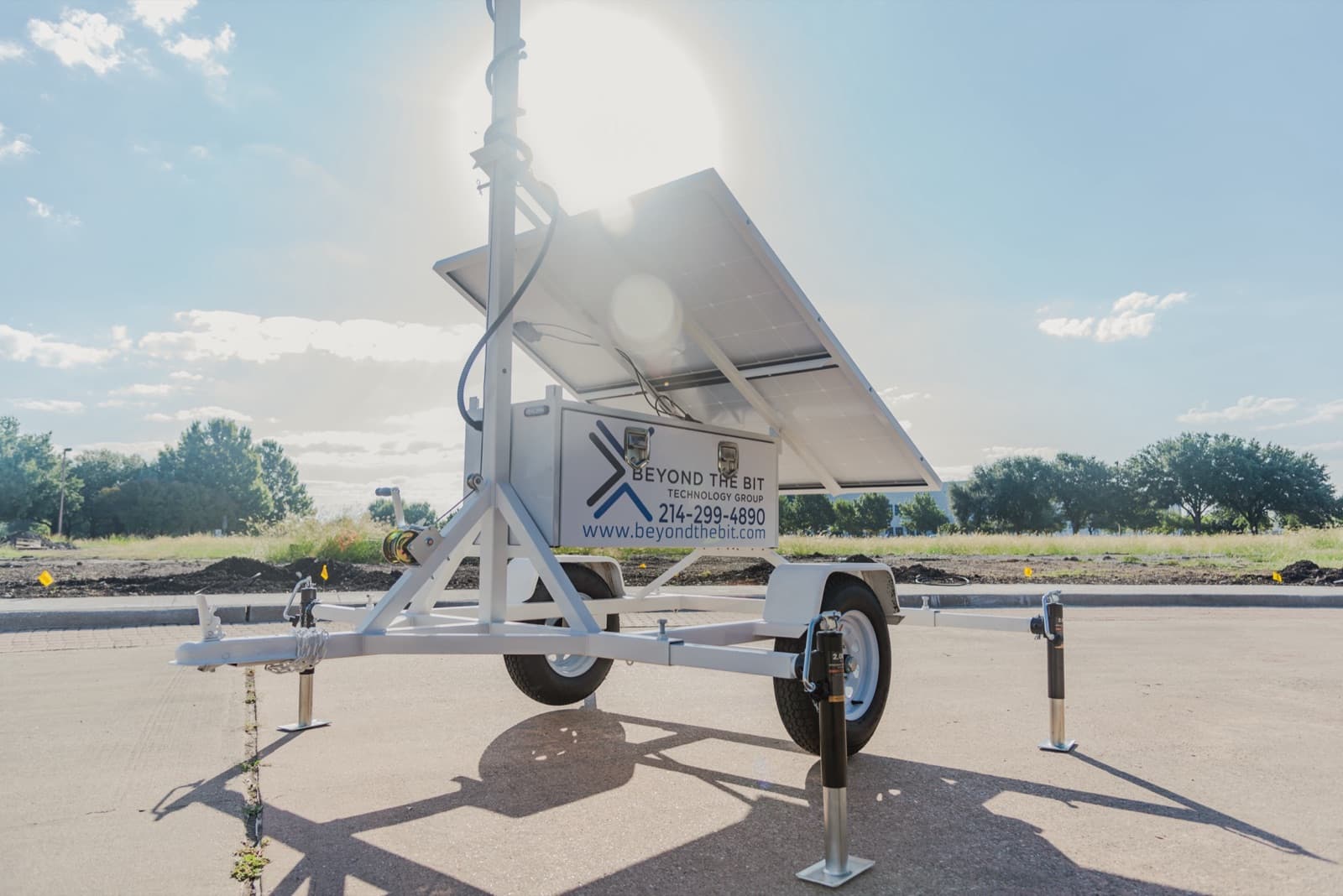
Solar array from behind, strobe lit on the cabinet corner. The winch at the mast base is what raises the head — one person, a few minutes, no ladder.
Plate 04 — Array and strobe
Procurement
Who pays for security on a property that earns nothing?
Owners, receivers, and asset managers are the buyers here, and the math they run is against the carrying cost of the vacancy rather than against an operating budget. A single stripped mechanical room usually costs more than a long stretch of monitored coverage.
Insurance is often the reason the call gets made. Carriers ask what protection is in place on a vacant structure, and some vacancy endorsements price differently when a property is monitored. We can put in writing what the trailer does and how the monitoring works so it goes in the file with the rest of the underwriting paperwork.
Paperwork is the standard vendor packet: W-9, certificate of insurance with whatever additional-insured language the ownership entity requires, and net-30 once the quote is signed. Portfolios with several empty assets run on one relationship, with units assigned by which property is currently exposed.
Get a quote for your vacant property →
or call 214-299-4890
Common Questions
Asked by vacant property buyers.
Does anything actually happen when the trailer detects someone?
Yes. Detection goes to a live operator who looks at the video before anything else happens. If a person is on the property, they get a warning through the trailer's speaker, and the call list and police escalation follow from there. That verification is also what separates a real dispatch from an unverified alarm in cities like Dallas.
The power is shut off at the building. Does that matter?
No. The trailer carries its own solar panels, battery storage, and cellular connection, so it runs on a property with the meter pulled and no network. That independence is the main reason it fits vacant buildings better than a wired system.
Can it cover both the building and the lot?
Usually, depending on the footprint. A raised mast covers a meaningful stretch of a lot and the elevations facing it. Larger properties, or buildings where the mechanical pads and the vehicle drive sit on opposite sides, run better with two units positioned to overlap.
How fast can a unit get to a property that just went vacant?
Deployment typically runs 1–2 weeks from a signed quote, and our fleet of nearly 100 trailers means availability is rarely the constraint. Properties inside the Dallas–Fort Worth core are the fastest to reach from our Richardson yard.