
Industry — Warehouse & Logistics
Warehouse & Logistics Security Cameras
The building is locked and alarmed. The yard is not. Loaded trailers sit in the court overnight with a seal and a landing gear between the freight and whoever pulls in off the service road. Dock cameras are aimed at the dock, so the rows out in the yard sit in the dark. This trailer watches the ground your fixed system was never pointed at, with an operator who can talk to whoever is standing in it.
Exposure
What goes missing from a yard after the last shift?
Yard loss rarely looks like a break-in. A tractor pulls in, hooks a loaded trailer, and leaves through a gate that was open for the night shift. Fuel comes out of parked units. Converters come off the fleet. By the time a driver reports a trailer missing at the morning dispatch, the freight has been gone for hours.
Trailer theft and cargo pilferage from the yard
A loaded trailer is one hookup away from leaving. Thieves who know the yard take the loaded ones and leave the empties, which means the loss is the freight and the claim, not the equipment. Partial pilferage is worse to catch, because the trailer is still sitting where it belongs the next morning.
Unsecured truck courts after the last shift
The gap between the last outbound and the first inbound is the exposure window, and it is the same hours every night. A court that stays open for late drivers is a court anyone can drive into, and most yards run without a guard because a guard for those hours costs more than the yard is budgeted for.
Fuel and catalytic converter theft from parked fleet
Parked tractors and yard trucks carry hundreds of gallons and sit still for hours. Siphoning shows up as fuel spend that does not match the miles, usually weeks before anyone connects it to a pattern. Converters come off the same units in under a few minutes each.
Unauthorized after-hours access at the dock line
People who are not on the schedule showing up at the dock line is the early signal for most of the rest of it. Catching that on live video, while they are standing there, is what stops it from becoming a claim.
Deployment
Where does the trailer sit in a distribution yard?
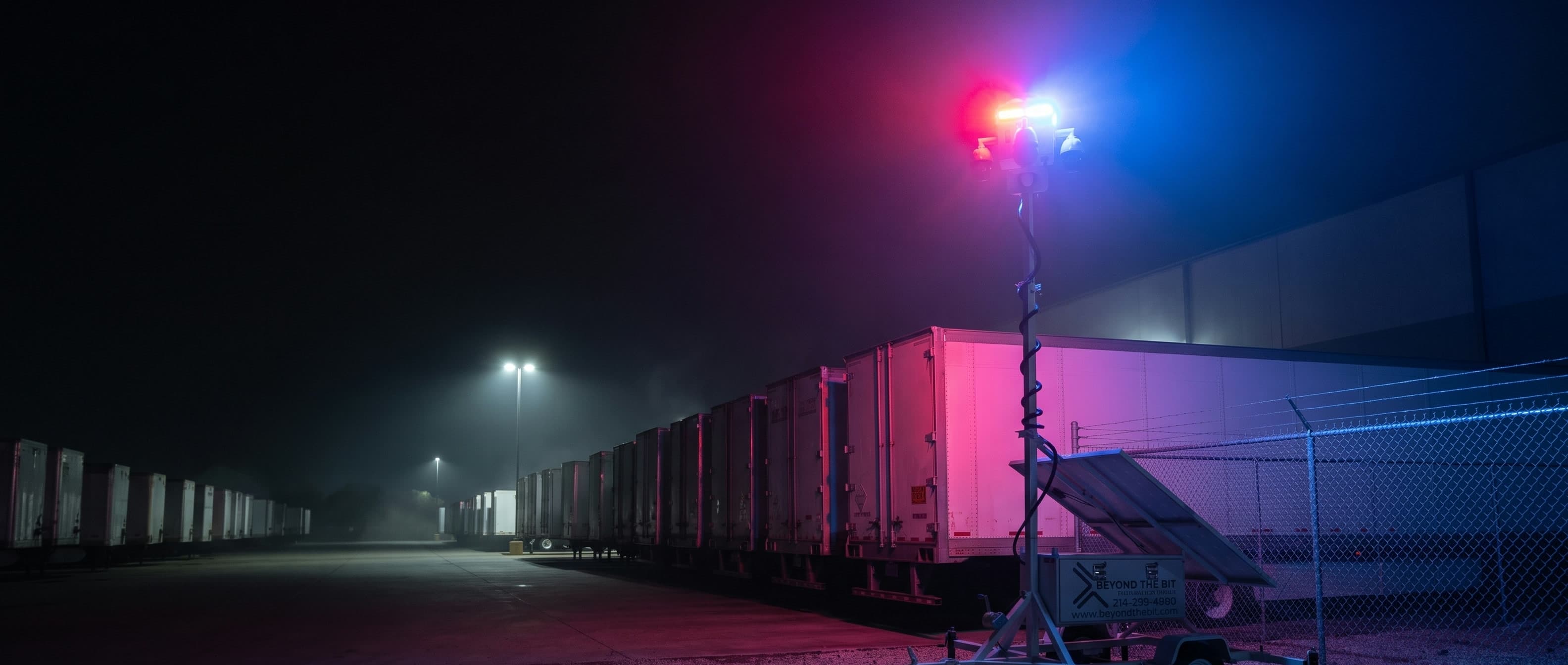
Placement follows the freight. The mast usually goes up where it can see the trailer rows and the gate at the same time, because those are the two things that matter: what is parked, and what is driving in to take it. On a long court, a position near the middle of the row often covers more useful ground than one at either end.
Live audio does the work that a recorded camera cannot. When an operator verifies someone in the yard who should not be there, they can speak through the trailer's speaker and say so. A yard that answers back at 2 a.m. reads very differently from a yard that only records.
It does not touch your building systems. The trailer runs on solar with battery storage and connects over cellular, so it does not need a drop from your network, a switch port, or a conversation with corporate IT. That also means it keeps watching during a power event that takes the building's cameras down.
Field Placement
Positioned to watch the truck court, trailer rows, and yard gate — the ground fixed dock cameras were never aimed at.
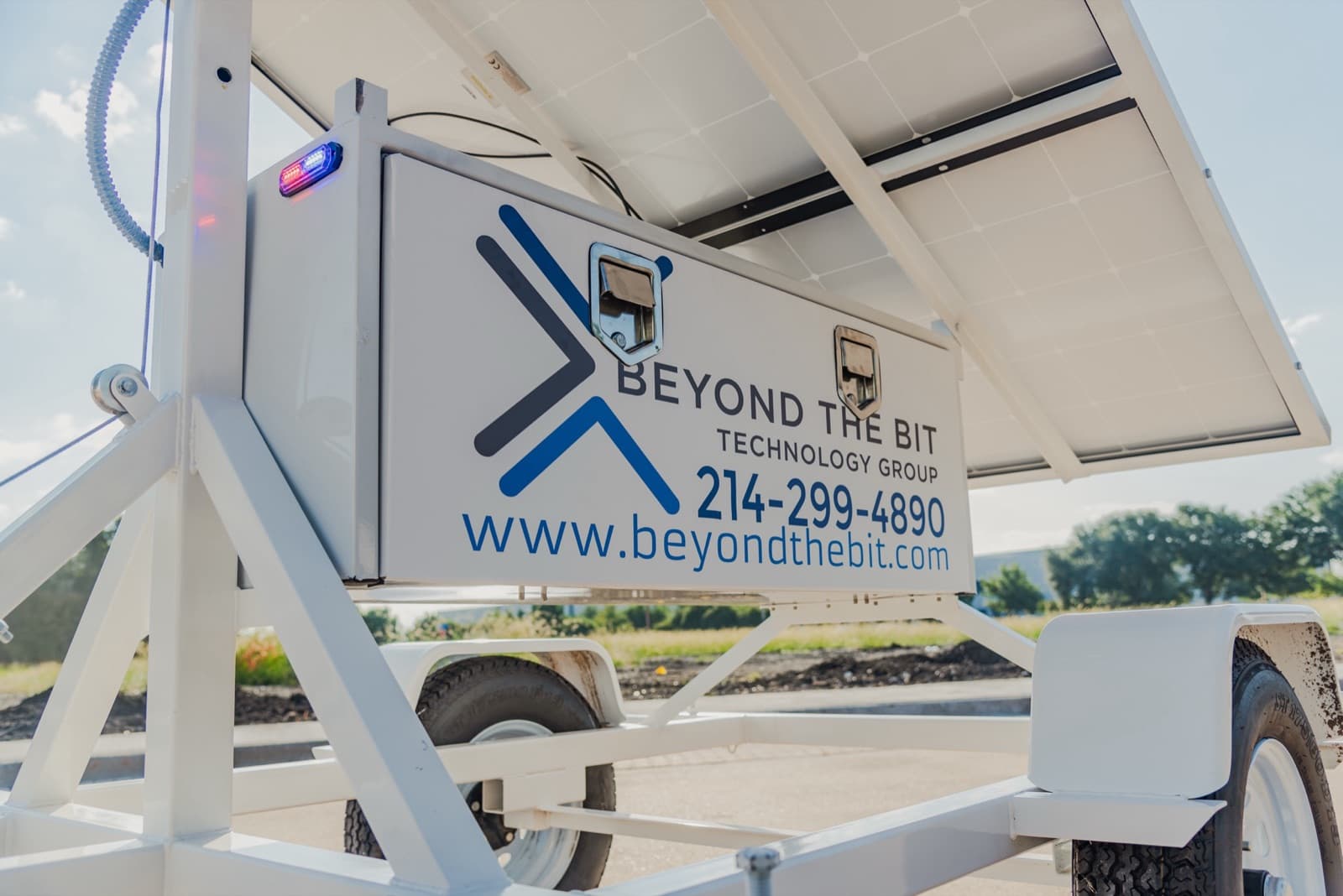
Field Photo — 2025 Deployment
Cabinet, decal and the strobe that fires when a verified intruder is on site. The strobe and the horn speaker are the first two responses, before a person is ever dispatched.
Plate 07 — Cabinet and strobe
Procurement
Who signs off on yard coverage at a warehouse?
Facility and distribution managers usually start it, because yard loss lands on their shrink numbers and their on-time performance. At a 3PL, the pressure often comes from the shipper instead, in the form of a question about what protects freight in the yard overnight.
Where the money sits depends on the operation. Some facilities carry it under facility operations, others under security or loss prevention, and seasonal peaks often run it as a temporary line for the months when the yard is fullest. A month-to-month arrangement fits a peak that ends in January better than a wired install does.
Vendor onboarding is standard: W-9, certificate of insurance with your additional-insured language, and net-30 after the quote is signed. Operators running several buildings across the Metroplex keep one account and assign units by which yard is carrying the most freight.
or call 214-299-4890
Common Questions
Asked by warehouse & logistics buyers.
We already have dock cameras. What does this add?
Dock cameras watch the dock and record for later review. This adds coverage out in the yard where the trailers actually park, and a live operator who verifies activity as it happens instead of a file somebody pulls the next morning. The audio warning and police escalation follow from that verification.
Can we run it only through peak season?
Yes. Short-term placements are normal, and peak is the most common reason a yard adds coverage. The unit is delivered, raised, monitored, and picked up when the season ends, without leaving any infrastructure behind in your yard.
Does it need a network drop or IT approval?
No. The trailer connects over its own cellular data and runs on solar power with battery storage, so it never joins your network. That usually removes IT from the approval path entirely.
How many trailers does a full truck court need?
It depends on the length of the court and how the rows are laid out. One raised mast covers a substantial stretch, and larger yards typically run two or more positioned so their coverage overlaps rather than leaving a dark gap between them. We walk the yard before quoting so the number is based on your layout.