
Service Area — Tarrant County
Watched in
Fort Worth, Texas.
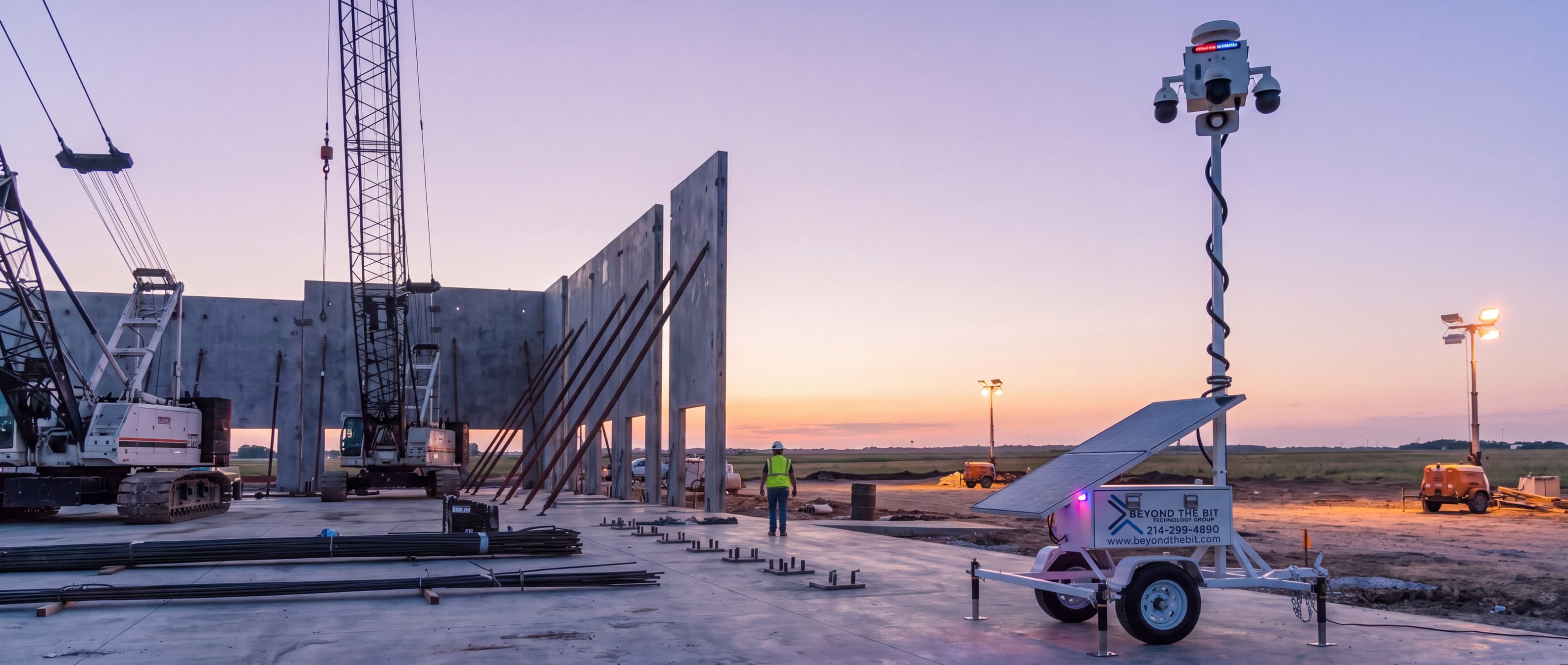
Fort Worth's growth runs on square footage, and nowhere shows it like the AllianceTexas logistics corridor — millions of square feet of distribution space under construction at once, with material staged in open yards for months before a building ever gets walls. That's the exact footprint a monitored trailer is built for: no trenching, no site power, no waiting on a permanent alarm system that won't exist until the building does. Roll a trailer onto the yard, raise the mast, and the site is watched the same day.
AllianceTexas, the Stockyards, and everything in between
AllianceTexas runs distribution and manufacturing construction at a scale most Texas cities don't see — warehouse shells the length of city blocks, material laydown yards that outlast a single phase, and equipment fleets parked overnight because moving them off-corridor isn't worth the diesel. Fort Worth's other growth story sits closer to downtown: Stockyards-area redevelopment mixes historic buildings with new construction, often on tight, high-visibility lots where a fence alone reads as an invitation, not a deterrent. I-35W construction frontage carries its own exposure — roadwork-adjacent staging areas visible from the highway, with material sitting close enough to the shoulder that a stop-and-grab theft takes under a minute. And out west, Walsh Ranch is building an entire community from raw land, which means months of subdivision infrastructure work with lumber packages, appliances, and fixtures staged on open lots long before anyone moves in. Different projects, same problem: expensive material sitting outside for longer than a fence alone can protect it.
Why open-yard staging is where trailers earn their keep
A distribution building under construction doesn't have permanent power for months, and it definitely doesn't have a wired alarm system — that gets installed near the end, if at all, since the building's own security plan usually doesn't extend to the parking lot and laydown yard around it. That gap is exactly where a security trailer sits. It's fully self-contained: solar panels and a battery bank for power, cellular data for connectivity, nothing to trench or wire into the site. For AllianceTexas-scale projects, that means we can drop several units around a single site's perimeter — one covering the material yard, one on the equipment row, one on the gate — without waiting on any permanent infrastructure to catch up. We run a fleet of nearly 100 trailers for exactly this reason: a ten-unit order for a large distribution project doesn't get rationed behind smaller jobs, and for the biggest orders we've staged trailers on 18-wheelers and set multiple sites in a single day.
The economics of Alliance-scale construction make that theft window worse before it gets better. A distribution shell might sit framed and dried-in for weeks while MEP trades work through rough-in, with racking systems, dock levelers, and finish material staged in the same open yard the whole time. None of it is bolted down yet, and none of it has a building's permanent access control watching it. A trailer parked at the yard entrance sees every vehicle that comes and goes during that window, which matters more here than almost anywhere else in Tarrant County given how much freight traffic already moves through the corridor legitimately, and a live operator who already knows what a delivery truck looks like versus an unfamiliar pickup idling by the material pile catches the difference a passive system would miss entirely.
Stockyards infill and I-35W frontage need a different setup
Not every Fort Worth job looks like Alliance. A Stockyards-area infill site might have thirty feet of laydown space total, wedged between a historic facade and a new steel frame — the trailer sits where it fits, mast raised just high enough to clear the building next door, zones drawn tight so foot traffic on a busy sidewalk doesn't trip constant false alerts. I-35W frontage work is the opposite problem: wide open sightlines from the highway, which means the material is visible to a lot more people than a downtown lot ever would be. We aim cameras at the staging area, not the traffic, and mask the highway shoulder out of the detection zone so trucks passing at 60 don't set off the same alert as someone climbing the fence.
Walsh Ranch sits somewhere between the two. A subdivision infrastructure phase runs wide and flat like an Alliance yard, but the theft pattern looks more like a McKinney build — lumber packages and fixtures staged lot by lot rather than in one central yard. Our crew tunes the zones to whichever pattern actually fits a given phase instead of running one generic setup across every Fort Worth job.
Getting a trailer onto your Fort Worth site
Our yard is in Richardson, roughly 45 minutes from most Fort Worth job sites depending on where you're building — Alliance runs a little longer, Stockyards and downtown a little shorter, and Walsh Ranch sits somewhere in between depending on which phase is active. Typical deployment is 1–2 weeks from a signed quote to a trailer standing on site, and larger orders move on the same timeline as a single unit because we're not waiting on equipment to free up elsewhere. Our crew handles delivery, placement, and camera aim with the monitoring center live on the call, then walks your site team through the call list before leaving. W-9, certificate of insurance, and net-30 terms are standard paperwork for us — send them with your quote request if your GC needs a vendor packet before a PO clears.
Field Photo — 2025 Deployment
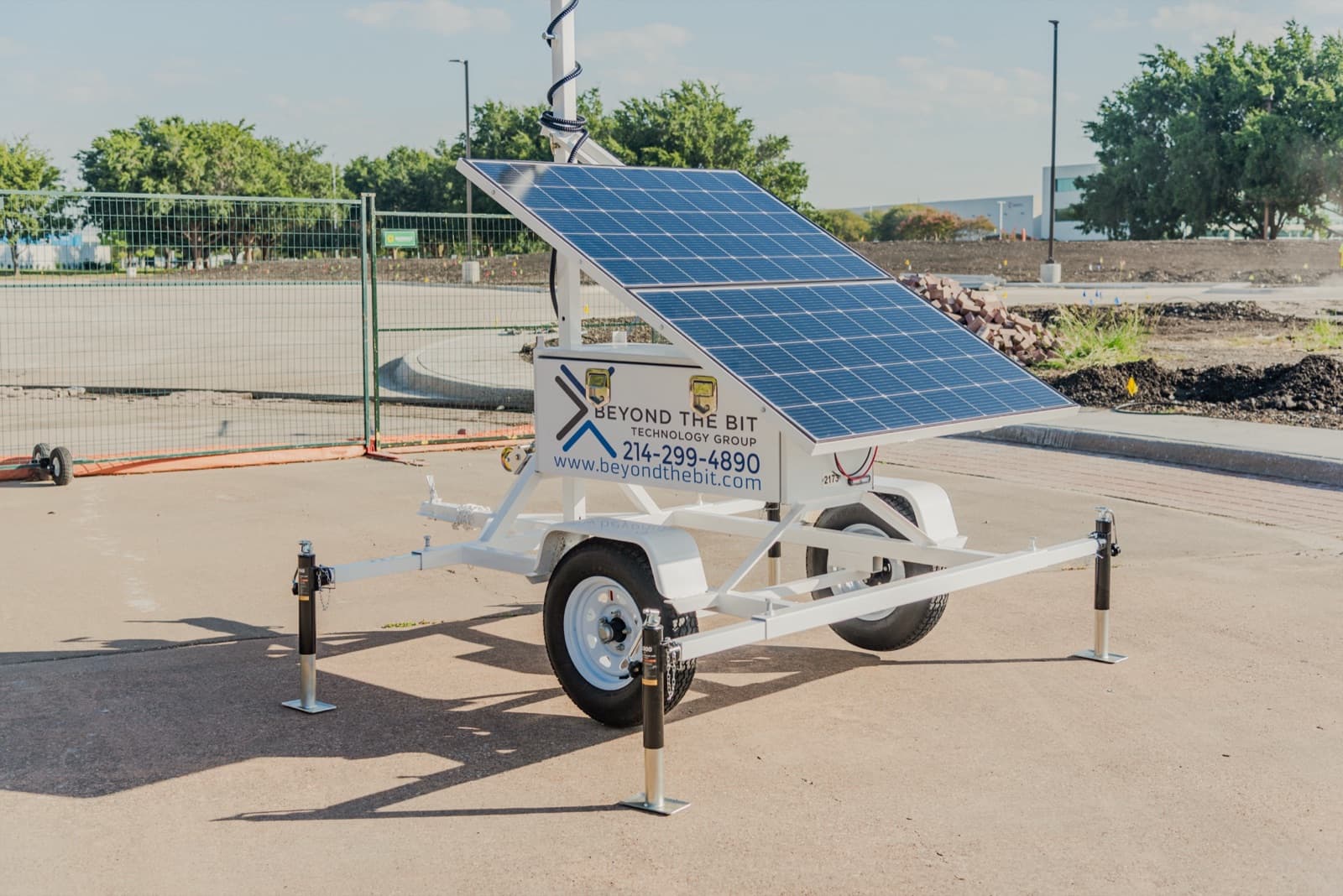
Tongue, axle, two-section array and the equipment cabinet in one frame. Single axle, levelled on four drop-leg jacks once it is spotted.
Plate 02 — Chassis, three-quarter
Where These Trailers Work
Common Fort Worth deployments.
Watching a site in Fort Worth? Call 214-299-4890
Questions — Fort Worth
Asked before booking.
Do you cover large distribution projects along the AllianceTexas corridor?
Yes — Alliance-scale distribution and manufacturing sites are some of the most common deployments we run. A fleet of nearly 100 trailers means a multi-unit order for a single large site doesn't wait behind smaller jobs, and for the biggest projects we've staged trailers on 18-wheelers and set several units in a day. Trailers are fully self-contained, so there's no need to wait on the building's permanent power or alarm system before the yard is watched — a bare slab with a fence around it is enough to get started.
How long does it take to get a trailer to a Fort Worth jobsite?
Typically 1–2 weeks from signed quote to a trailer on your site, and our Richardson yard is about 45 minutes from most Fort Worth addresses. We aim cameras with our monitoring partner live on the call during install, so the site is actually watched — not just delivered — before our crew leaves. Multi-unit orders for larger sites run on the same timeline, and we'll walk your superintendent through the call list before anyone drives back to Richardson.
Ready to get a trailer on your Fort Worth site? Get a quote built around your actual site.
Request a Free Site Assessment