
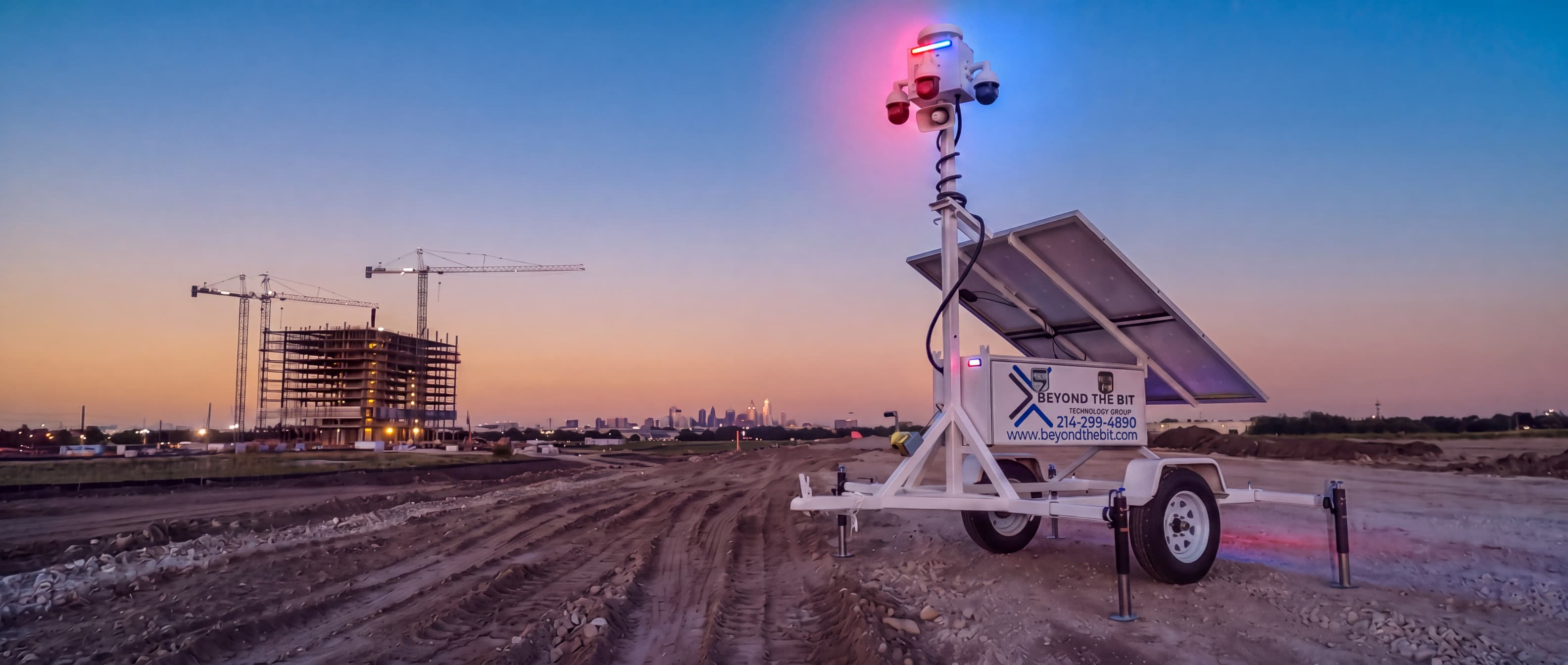
Solution — Visible Deterrence
Most incidents end at the warning.
A lit mast, a strobe, and a live voice through the speaker do more work than most people expect. Here's why visibility stops theft before it starts — and what to do when it doesn't.
Why It Works
Visibility beats recording.
A game camera records a crime. It's strapped to a tree or a fence post, hidden on purpose, and it does exactly one job: capture footage for someone to review after the fact. By the time anyone watches that clip, the copper's already at a scrapyard.
A monitored trailer works the opposite direction. The mast is tall and lit on purpose. The camera head is visible, not hidden. The strobe is blue and unmistakable. None of that is an accident — a hidden camera can only tell you what happened. A visible one, backed by a person who can talk through a speaker in real time, can interrupt what's happening. Most people scouting a jobsite for an easy night are looking for the absence of exactly that. When they see it instead, most of them leave without ever testing whether the system actually works.
The Talk-Down Moment
A real voice, not a recording.
When a camera flags real motion inside a masked zone, a live operator at our Texas-licensed monitoring partner pulls up the feed and looks. If it's someone who shouldn't be there, the strobe fires and that operator speaks directly through the trailer's loudspeaker — describing what the person is wearing, where they're standing, that they're on camera and being watched right now.
That specificity is the whole point. A generic recorded warning gets tuned out the same way a car alarm does. Being addressed directly, in real time, by someone who is clearly watching, is a different experience — one most people didn't plan for and don't want to stick around for. In practice, that's where the encounter usually ends: someone climbs back over the fence before the operator finishes the second sentence.
On a Real Site
What deterrence looks like on a DFW laydown yard.
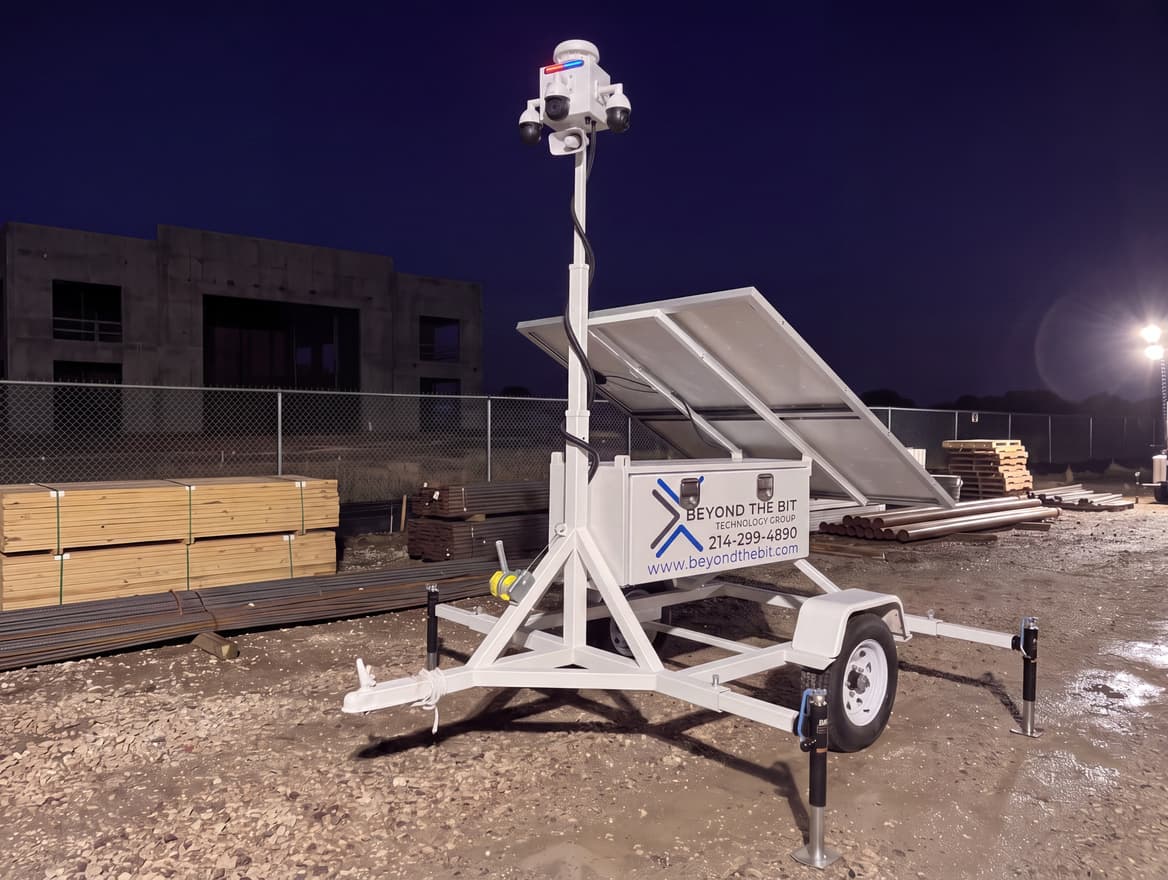
Picture a laydown yard off I-35E stacked with steel pipe, conduit, and staged appliances waiting on rough-in. It's dark, the crew's long gone, and the material sitting there is worth more than most of the equipment on site. That's the exact window a monitored trailer is built for.
The mast sits raised over the material row, camera aimed down the length of the stacks, strobe visible from the street. Anyone driving the yard looking for an easy pull sees it before they ever get out of the truck. On the sites where something does trigger a check, most of what gets caught is a deer, a stray dog, or a driver who took a wrong turn — the zone masking and object categorization filter that out before it ever reaches a human. What's left is the handful of real attempts, caught early enough that a warning is still enough to end it.
When Deterrence Isn't Enough
Some people don't leave.
Deterrence handles most of the traffic a jobsite sees after hours, but not everyone who climbs a fence turns around when the strobe fires. Someone determined, someone under the influence, or a group working together might push past a warning that would stop a solo opportunist cold. That's where the response side of the system takes over — the call list, the police contact, the video verification that gets Dallas PD to actually show up.
Common Questions
On deterrence, answered.
What happens when a camera detects someone at 2 a.m.?
A live operator sees it within moments. The cameras categorize motion — person, vehicle, bicycle — and ignore masked-off areas like public roads, so false alarms don't pile up. Our Texas-licensed monitoring partner verifies the video, works your call list to confirm whether anyone should be on site, can issue a live audio warning through the trailer's speaker, and contacts police when it's real.
Do security camera trailers actually stop theft?
Deterrence does most of the work. A lit mast, a visible camera head, a blue strobe, and a live voice announcing that someone is watching changes the math for whoever is walking the fence line. When someone pushes past that anyway, the incident is video-verified and escalated while it's still happening — not discovered on a recording Monday morning.