
Company — Est. Richardson, TX
We used to lose material. Now we watch for it.
Beyond the Bit Security Trailers started as a problem on somebody else's punch list, and it turned into a fleet.
01 — Where This Started
Beyond the Bit didn’t start as a security company. It started as a general contractor’s problem.
Site supers on our crews kept walking a jobsite Monday morning to find copper wire stripped out of a panel that had been roughed in on Friday. Catalytic converters cut off a tool truck overnight. A generator gone from behind a stack of block, a trailer of finish hardware broken into the week before it was needed. None of it was catastrophic on its own, until the insurance claim, the re-order lead time, and the conversation with the owner about why the schedule slipped again.
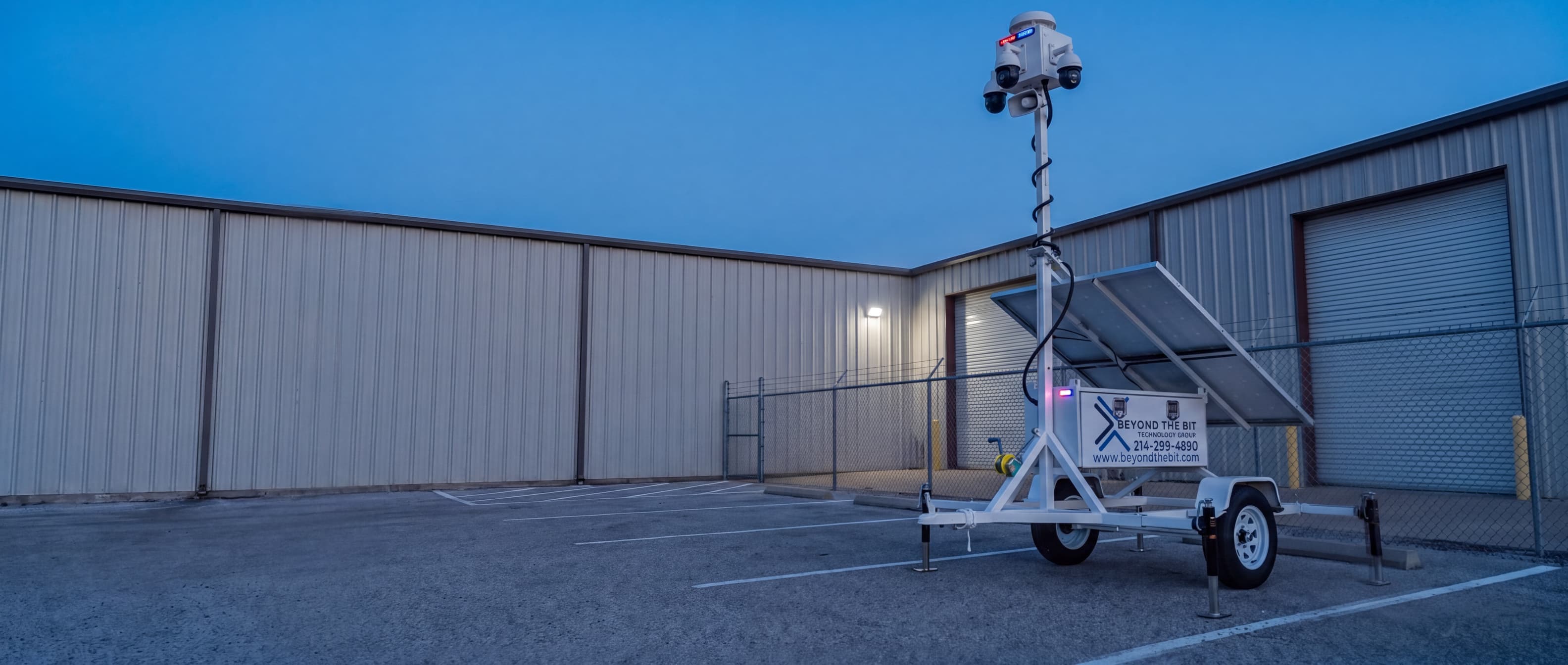
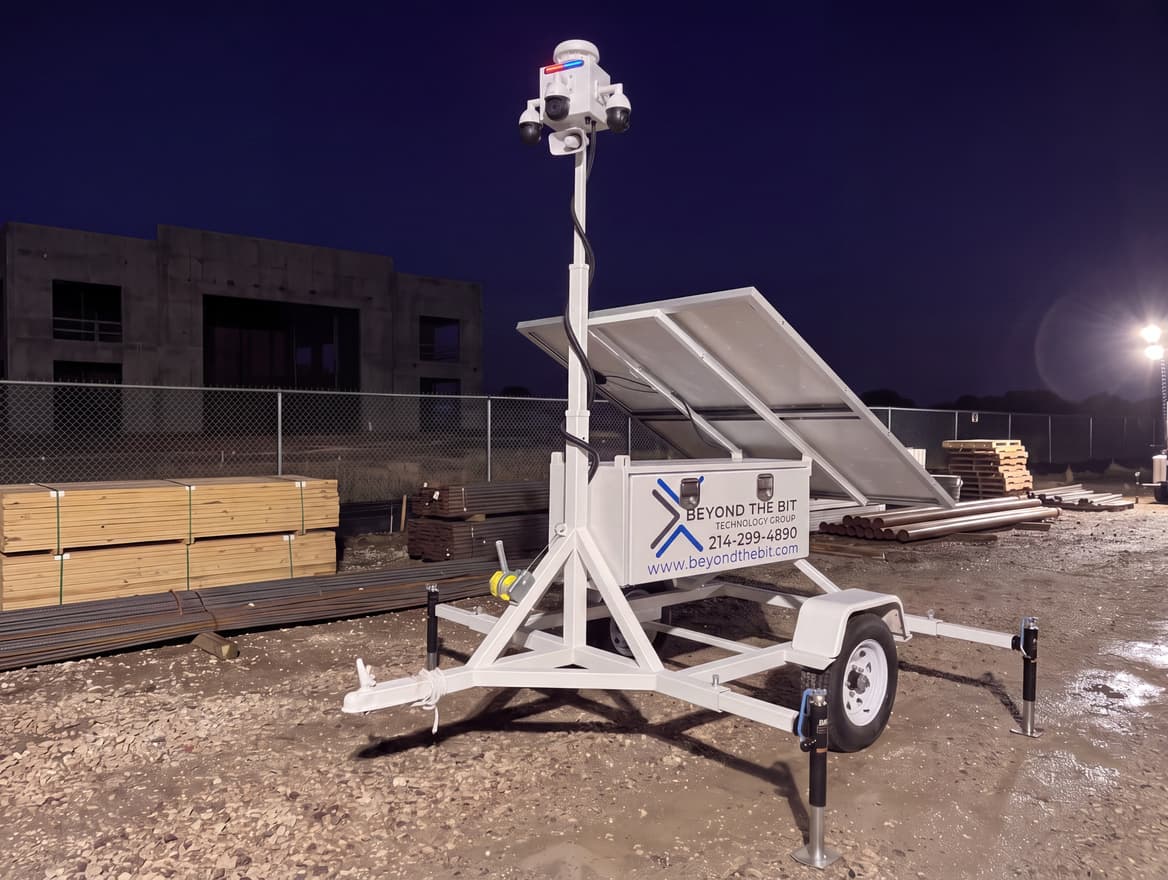
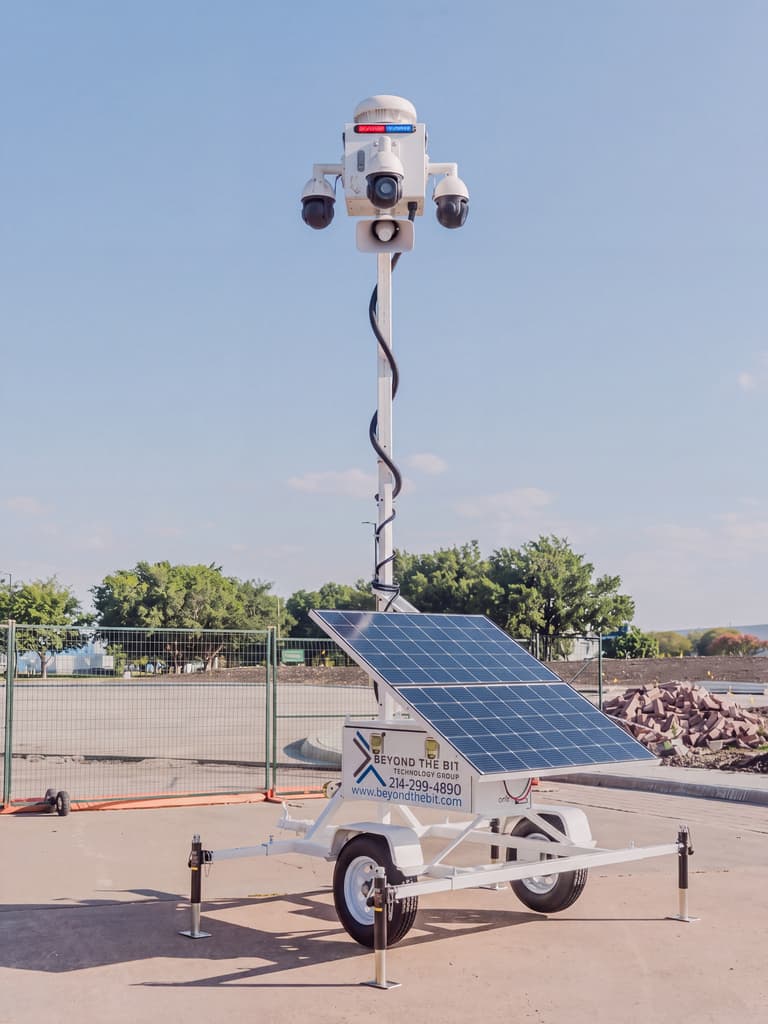
Fencing didn’t stop it. A guard sitting in a truck for eight hours a night didn’t stop it either, and cost more than the material it was supposed to protect. So a handful of people who’d spent their careers running Texas commercial jobs — pulling permits, managing subs, tracking budgets against a General Requirements line — started bolting cameras to a trailer, wiring it to solar and cellular, and parking it where the theft kept happening.
It worked. Not because the technology was exotic, but because someone was actually watching, and a site that looks watched gets left alone. Word moved between supers the way it always does on a job — one PM tells another, one project executive calls a sister company asking who set up the cameras on that trailer. What started as one unit solving one problem on one site is now a fleet pushing toward 100 trailers, working construction sites, vacant commercial properties, dealership lots, and event grounds across Dallas–Fort Worth and beyond.
The material at risk changes by industry, but the pattern doesn’t. Rough-in copper disappears between the electrical inspection and drywall. Diesel siphons out of equipment parked overnight. Vehicles go missing off a dealership lot a few at a time, spaced out so nobody notices the pattern until the count comes up short at month end. A trailer with a lit mast and a live operator watching it changes the math on all of it, because the bet a thief is making is that nobody’s looking.
02 — How We Operate
We run this the way we ran jobs before: own the equipment, own the schedule, don’t hand off the parts that matter to someone else’s calendar.
The trailers are ours. The trucks that deliver and place them are ours. The yard they stage out of sits in Richardson, which puts every corner of the Metroplex inside a same-day drive and means a trailer isn’t waiting on a rental company’s availability three states away.
Beyond the Bit Technology Group holds Texas DPS Private Security License #B31111401 — issued by the Department of Public Safety under Occupations Code Chapter 1702, covering us as a security contractor, alarm company, and electronic access company. That’s the license the state requires to legally sell and operate monitored security here. We treat it as the floor any provider doing this work honestly should clear, and we’d ask the same of anyone you’re comparing us against.
The cameras themselves don’t call anyone. Live human monitoring runs through a Texas-licensed third-party monitoring partner — operators who watch the video feed, verify what the motion analytics flag, work the call list we build with you, and contact police when it’s real. That partner is licensed the same way we are. We split the work on purpose: we know construction and jobsite risk; a monitoring center’s whole job is watching screens and dispatching people. Neither of us tries to do the other one’s job worse than a specialist would.
Coverage follows the same logic. DFW is home ground, and for the right project we deploy statewide — Austin, Houston, San Antonio, Waco, and everything inside roughly a four-hour drive of Dallas. A ten-unit order for a multi-acre site doesn’t wait on equipment; we’ve staged trailers on 18-wheelers and set several sites in a single day.
03 — Who Answers The Phone
Ask anyone who has dealt with a national security vendor what happens when something goes wrong on site. A ticket number. A call center in another time zone. A technician scheduled for “sometime next week.”
That’s not how this runs. When you call, you’re talking to someone who can pull up your site, knows which corridor the mast is aimed down, and remembers you asked for the call list updated after your foreman changed last month. If the trailer needs to move to cover a different phase of the job, that’s a conversation with a person who understands what phase-two mobilization means, not a form that routes into a queue.
That’s the real advantage of staying local and staying small enough to know our customers by name: the people running this business are the people who answer when it rings. As the fleet grows past 100 units, that’s the one thing we’re not willing to trade for scale.