
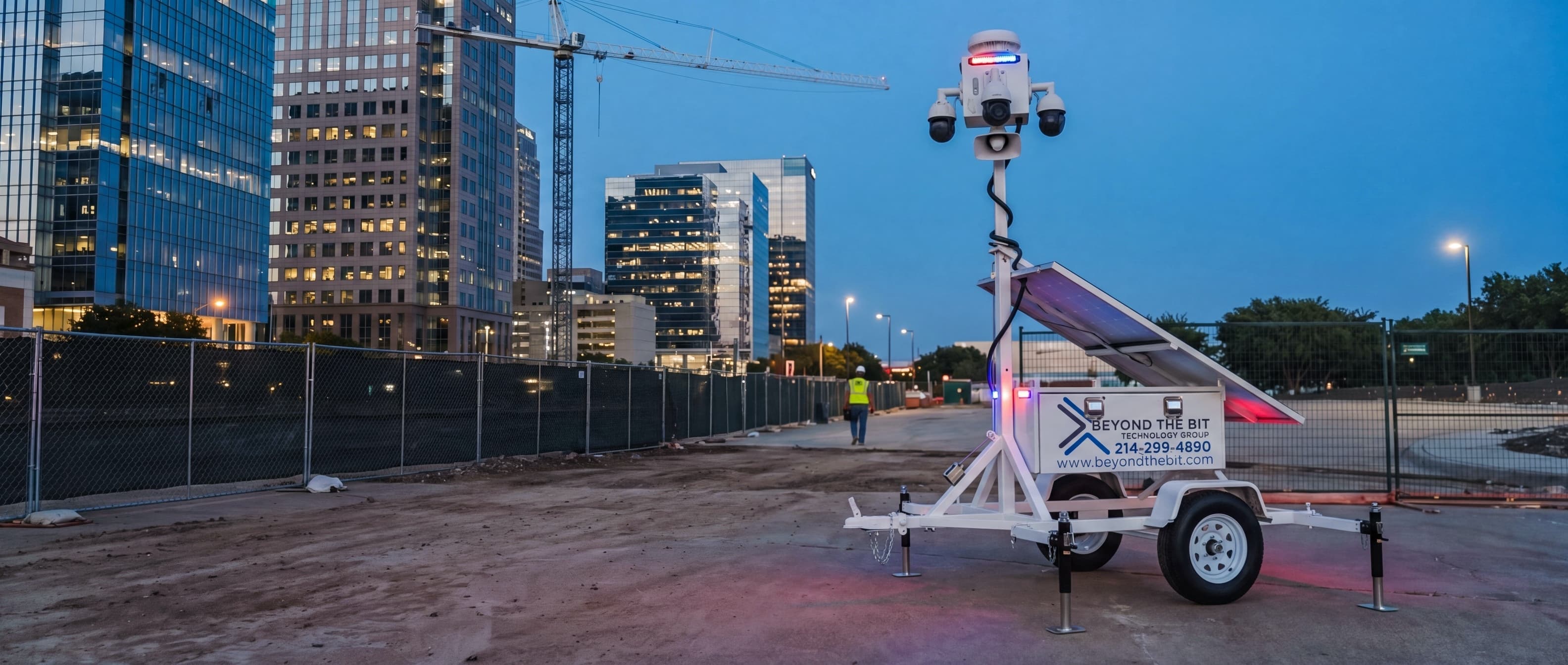
Service Area — Dallas County
Watched in
Dallas, Texas.
Dallas runs on a rule most property managers never hear about until they need it: Dallas PD has operated under a verified-response ordinance since 2006, and officers are not dispatched to an unverified commercial burglar alarm. A trailer that just makes noise doesn't get police moving. A trailer with a live operator watching real video does. That's the entire reason our cameras run through video verification instead of a siren nobody answers, and it's why Dallas sites — Downtown towers, Design District infill, Stemmons warehouses — are where the chain matters most.
Downtown towers, Design District builds, Stemmons warehouses
Downtown and Uptown high-rise jobs stack laydown yards into whatever curb space a permit allows, with rebar, MEP rough-in material, and rented lifts sitting behind a chain-link fence a Sawzall opens in under a minute. Design District infill projects run the same exposure at a smaller footprint — converted warehouses and new mixed-use builds tucked between galleries and restaurants, often unattended for stretches once a phase wraps and before tenant buildout starts. Head northwest along the I-35E Stemmons corridor and the risk changes shape: distribution buildings and cross-dock warehouses with loading areas that back straight onto the highway frontage road, visible to anyone driving by at 2 a.m. South Dallas industrial parks off I-45 carry heavier equipment exposure — skid steers, generators, and material that doesn't move fast enough to keep up with a crew that does. Four different footprints, four different theft patterns, and the same answer: put a camera mast where the gate is, mask off what you don't need to see, and let the trailer watch the parts of the site nobody's standing on at night.
Why a verified alarm matters more in Dallas than anywhere else in Texas
Most cities dispatch an officer the moment an alarm panel trips. Dallas doesn't work that way, and hasn't since 2006. Under the city's verified-response ordinance, DPD does not send a unit to a commercial burglar alarm unless it's been verified — confirmed by audio, video, or an eyewitness that someone is actually on scene doing something wrong. An unmonitored trailer or a bare motion light fails that test every time. It trips, nobody confirms anything, and the call sits.
Our chain is built around clearing that bar. Cameras categorize motion — person, vehicle, bicycle — inside zones drawn around your site, so a bus passing on Stemmons or a pedestrian on a Design District sidewalk doesn't fire an alert. When something inside the zone moves, a live operator at our Texas-licensed monitoring partner is looking at the video within moments, not reading a text alert after the fact. That operator makes the call: false alarm, or a real person on your site. If it's real, they can trigger the strobe and speak through the trailer directly — most people leave before the second sentence — and they work your call list while deciding whether this rises to a police call. When it does, that's a verified report, the kind Dallas actually dispatches on. The ordinance exists because too many false alarms burned through department resources. Verification is what gets a Dallas officer in a truck.
What actually happens on a Dallas jobsite at 2 a.m.
Picture a Stemmons warehouse mid-buildout, half the copper pulled and staged for the next day's crew, gate chained but no one on site. Someone cuts the fence at 1:52 a.m. The camera catches motion in the material zone and tags it as a person within seconds — not a truck passing on the frontage road, not a stray cat setting off a cheap sensor. A live operator pulls the feed, confirms it's a person moving through the staging area, and fires the strobe. The trailer's speaker cuts in: someone's watching, and the property is under camera surveillance. Most people bail right there — a job that was supposed to take ninety seconds isn't worth it once a voice is talking back. If they don't leave, the operator is already working your call list and building the verified report Dallas PD needs to actually roll a unit. None of that depends on someone checking a phone app the next morning. It happens live, while it's still happening, and it happens because the whole chain was built around the fact that Dallas won't dispatch on a guess.
Getting a trailer onto your Dallas site
Our yard sits in Richardson, about 20 minutes from most Dallas job sites depending on where you land — Downtown, Uptown, the Design District, or the Stemmons corridor are all a short run up 75 or 35E. Typical deployment from signed quote to a trailer standing on site runs 1–2 weeks, and multi-unit orders don't wait in line behind other jobs — we run a fleet of nearly 100 trailers, so a ten-unit order for a Downtown high-rise phase doesn't get rationed. Our crew places the unit, raises the mast, aims the cameras with the monitoring center live on the call, and walks your team through the call list before anyone drives off. If your GC needs a W-9, certificate of insurance, or net-30 terms before a PO clears, that paperwork is standard for us and doesn't slow down the timeline. And once the mast's up, it stays up for the length of the rental, watching the same zones whether it's a Tuesday afternoon shift change or a holiday weekend with the whole crew off site.
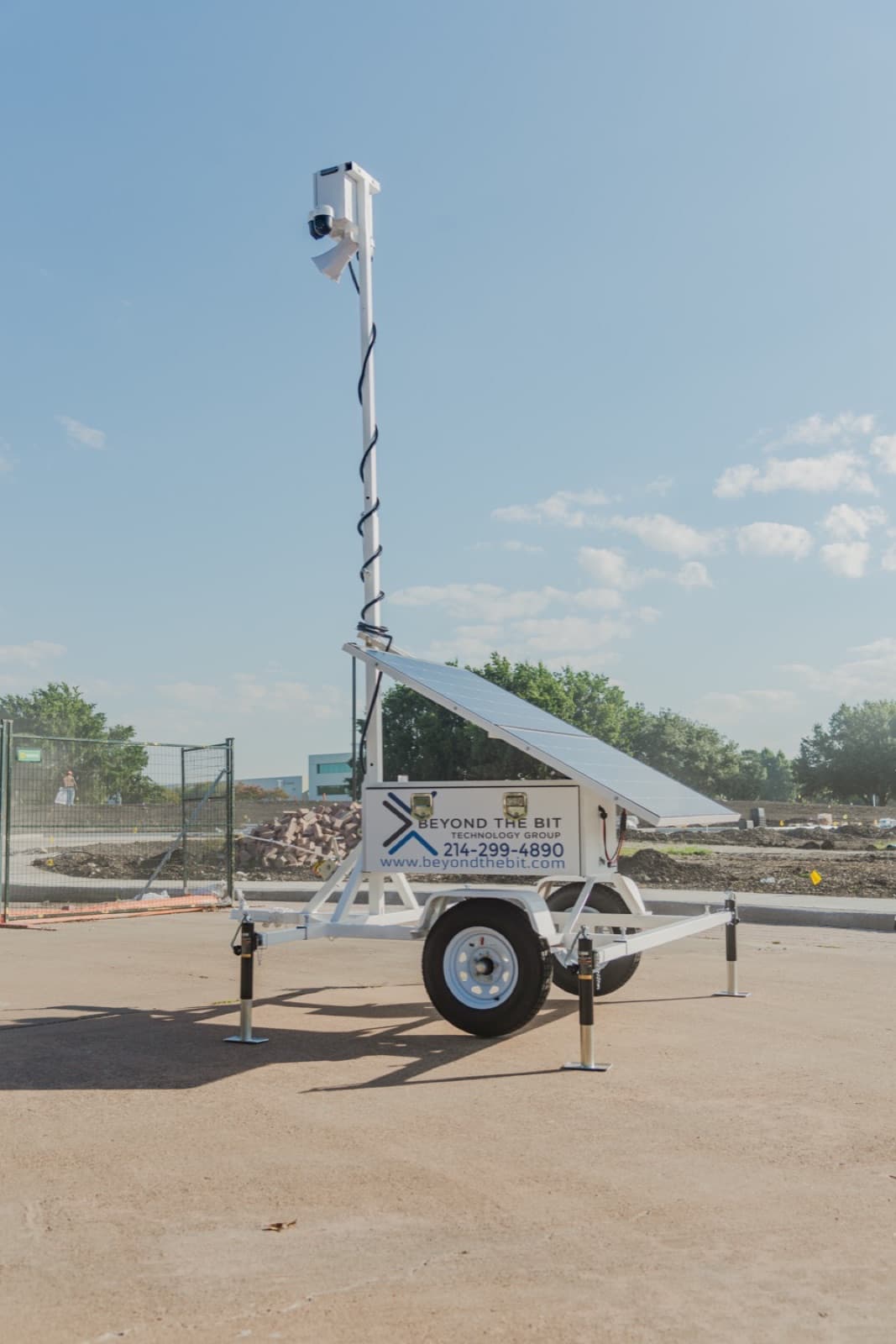
Field Photo — 2025 Deployment
Mast at full extension on a commercial pad. Four jacks down, panel tracked to the afternoon sun, cameras above the fence line — the way every unit is left after installation.
Plate 01 — Full unit, mast raised
Where These Trailers Work
Common Dallas deployments.
Watching a site in Dallas? Call 214-299-4890
Questions — Dallas
Asked before booking.
Does Dallas police actually respond to a security trailer alert?
Yes, when the alert is verified. Dallas PD has operated under a verified-response ordinance since 2006 and does not dispatch officers to unverified commercial burglar alarms. Our trailers route every alert through a live operator who watches the video, confirms a real person is on site, and can escalate to police with that verification attached — which is what gets Dallas to actually send a unit instead of logging an unconfirmed call. A bare motion light or an unmonitored camera can't do that; it just makes noise nobody's required to answer.
How fast can you get a trailer onto a Downtown Dallas or Design District site?
Our yard is about 20 minutes from most Dallas addresses, and typical deployment runs 1–2 weeks from signed quote to a trailer standing on your site. Downtown high-rise and Design District infill jobs are routine for us — tight footprints and curb-space constraints are normal in this part of the city, and our crew plans placement around them during the free site assessment before delivery day, so the mast lands somewhere that actually covers the laydown area instead of the sidewalk.
Ready to get a trailer on your Dallas site? Get a quote built around your actual site.
Request a Free Site Assessment