
Industry — Events & Municipal
Event & Municipal Security Cameras
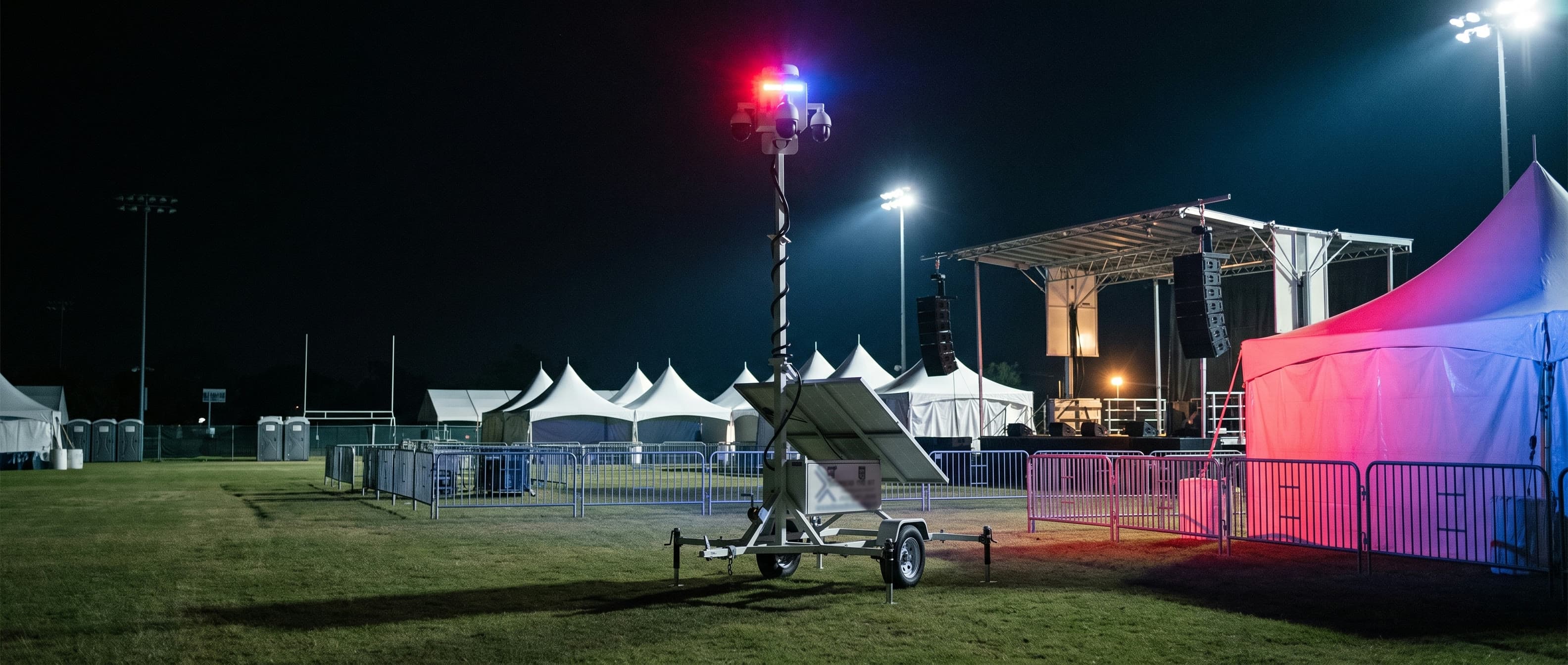
An event site or a public works yard doesn't run on a normal schedule. Stages and fencing sit staged overnight before a festival, then get struck and sit again waiting on pickup trucks. A utility laydown yard holds pipe and equipment between projects with no crew on site most days. A seasonal venue sits fully empty nine months of the year. None of that fits a guard contract built around a fixed shift — it needs coverage that shows up for exactly as long as the exposure lasts and leaves when it's over.
Exposure
What's actually at risk on an event site or public yard?
Exposure here is about timing, not a fixed location. A staging area holds stages, fencing, and AV equipment for days before and after an event, unattended overnight both times. A public works yard holds pipe, barricades, and utility equipment between projects with no regular staff walking it. A seasonal venue sits fully idle most of the year. Each one is exposed exactly when nobody's scheduled to be there.
Overnight staging areas for stages, fencing, and AV
Load-in for a multi-day event puts stages, barrier fencing, and AV equipment on site well before the event starts, and leaves it there again during teardown — two separate overnight windows where high-value gear sits with no crew present.
Public works yards and utility laydowns
Pipe, barricades, signage, and utility equipment staged between projects sit in yards that often aren't staffed daily, especially on smaller municipal jobs where the same crew rotates across several active sites.
Seasonal venues that sit empty most of the year
A fairground, amphitheater, or festival site that's active a few weekends a year sits fully unattended the rest of it — long enough for a break-in to go unnoticed for weeks, not hours.
Parks and facilities after hours
Municipal parks, pools, and rec facilities draw vandalism and break-ins after closing specifically because a fixed patrol schedule is predictable, and a facility with no live monitoring gives someone all night to work.
Deployment
Where does the trailer sit on a short-term site?
Placement covers the actual footprint of the event or yard — the staging area, the equipment laydown, or the facility entrance — for exactly the window it needs watching, whether that's four days for a festival or four months for a seasonal closure. Our crew scopes the placement against your event or project timeline, not a generic template.
There's no site infrastructure required to make it work. No power tie-in, no data line, nothing to install or remove when the deployment ends — delivery, raising the mast, and pickup are the only steps on either end, which fits event and municipal timelines that don't leave room for a construction-style setup.
Short-term math works the same as a longer rental. A trailer delivered for a five-day festival costs the same to deploy and monitor as one delivered for a longer commercial job — the arrangement scales to the actual window, not a minimum-term assumption built for a jobsite.
Field Placement
Short-term placements measured in days or weeks — delivered, raised, and monitored without any site infrastructure.
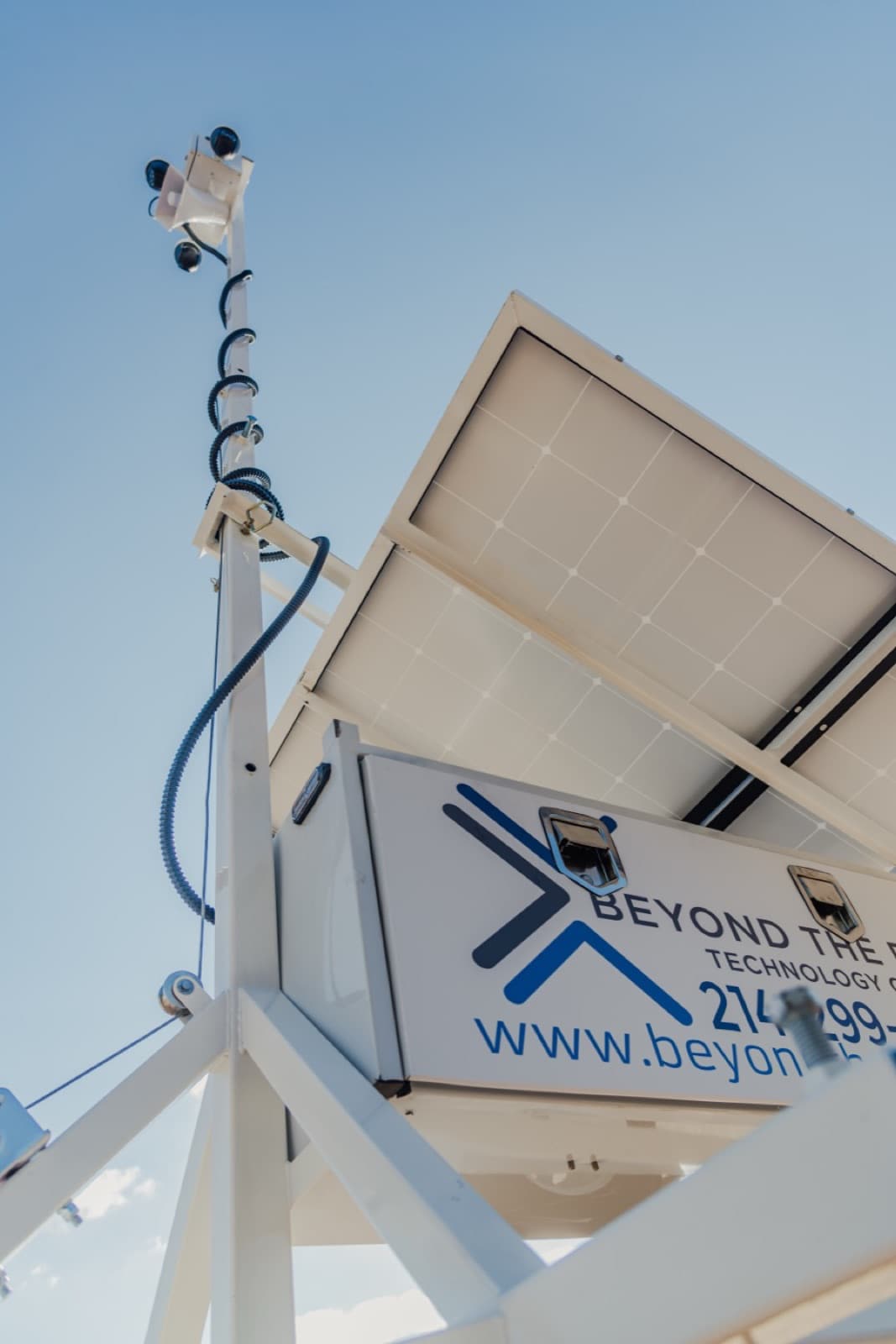
Field Photo — 2025 Deployment
From under the tongue. Roughly fifteen feet of mast puts the cameras above stacked material, site trailers and most perimeter fence, with the panel underside just below.
Plate 06 — Mast, from the tongue
Procurement
Who approves security trailer rental for events and municipal sites?
Event operators and facilities directors typically make the call for a single deployment, while city and county procurement handles it as a formal bid or purchase order process for public agencies. Either way, the decision usually comes down to the same math: the cost of a monitored trailer against the value of the equipment and material sitting exposed overnight.
Government and municipal buyers get the same vendor packet as any commercial account: W-9, certificate of insurance, and net-30 terms, plus whatever additional documentation a public bid process requires — that paperwork comes filled out with the quote, not after.
Recurring events reuse the same setup. A festival or fair that runs annually can lock in the same trailer placement and timeline each year instead of re-scoping the deployment from scratch every season.
Get a quote for your event or site →
or call 214-299-4890
Common Questions
Asked by events & municipal buyers.
Can you deploy for just a few days around a single event?
Yes. Short-term placements measured in days or weeks are normal for event work — delivery ahead of load-in, monitoring through the event and teardown, and pickup once the site is clear. There's no minimum-term construction schedule attached.
Does a municipal deployment need to go through a formal bid process?
It can, and we're set up for it. W-9, certificate of insurance, and net-30 terms are standard, and we can provide whatever additional documentation a city or county purchasing process requires alongside the quote.
Can the same trailer setup repeat for an annual event?
Yes. Once a placement and timeline are dialed in for a recurring event, we can reuse that plan year to year instead of re-scoping the deployment from the beginning each season.
Who handles the trailer during load-in and teardown, us or your crew?
Ours. Our crew delivers, positions, and raises the mast, and comes back to pick the trailer up once the event or project window closes — your event or facilities staff doesn't need to manage equipment on top of everything else load-in and teardown already demand.