
Industry — Construction
Construction Site Security Cameras
A commercial jobsite sits unguarded for more hours than it's worked. Crews clear out at 3:30. Copper sits exposed after rough-in. Skid steers sit fueled overnight behind a chain-link fence and a padlock — the only thing between a full crew's worth of material and whoever's driving the access road at 2 a.m. This trailer stands in that gap: mast up, cameras live, an operator watching the site the way your super would if the job never ended.
Exposure
What actually gets stolen off a DFW jobsite?
Material theft follows the build schedule, not chance. Copper disappears in the days after rough-in, before drywall closes the wall cavities. Lumber and appliance packages disappear once they're staged on a slab and before they're installed. Equipment and fuel disappear overnight, whenever a laydown yard sits unwatched between shifts. Each phase opens its own window, and closes it just as fast.
Copper wire and pipe after rough-in
The two- to three-week stretch between rough-in and drywall is when copper is exposed, unlabeled, and easiest to strip in bulk. A crew that pulled wire Friday can find half of it gone by Monday, and scrap buyers rarely ask where a truck bed of romex came from.
Lumber packages and appliances staged on slabs
Framing packages and rough-in appliances get delivered ahead of the crews that install them, which means a slab can carry a full house's worth of material with no walls around it yet. Two people with a pickup can clear a garage's worth of package lumber before sunrise.
Skid steers, generators, and attachments left overnight
Equipment staged in a laydown yard between shifts is a target because it's mobile, not just because it's valuable for scrap. Quick-attach buckets and forks walk off separately from the machines they came with, and a skid steer with keys left in the ignition can be off the site in under two minutes.
Fuel theft from parked equipment
Diesel siphoned from tanks and idle machines overnight shows up as a fuel bill that doesn't match logged hours, long before anyone notices a pattern. On a site running several machines, a few nights of siphoning adds up to real money before anyone flags it.
Deployment
Where does the trailer sit on an active jobsite?
Jobsite security cameras only earn their keep if they're pointed at the right thing, so the trailer goes where the risk actually concentrates — usually the gate, the laydown yard, or the material staging pad, wherever the site is carrying the most value that week. Our crew walks the site with your superintendent before the mast goes up, so cameras cover the equipment row and staging area, not the empty half of a lot that isn't holding anything yet. On a site with more than one entrance, that same walk is how we decide whether one placement covers both or whether the job needs a second unit.
It moves as the job moves. A trailer that started at the gate during mobilization can shift to cover material staging once framing starts, then reposition again once trades move indoors and the yard empties out. That's a phone call, not a change order — repositioning a towable unit doesn't require a new install.
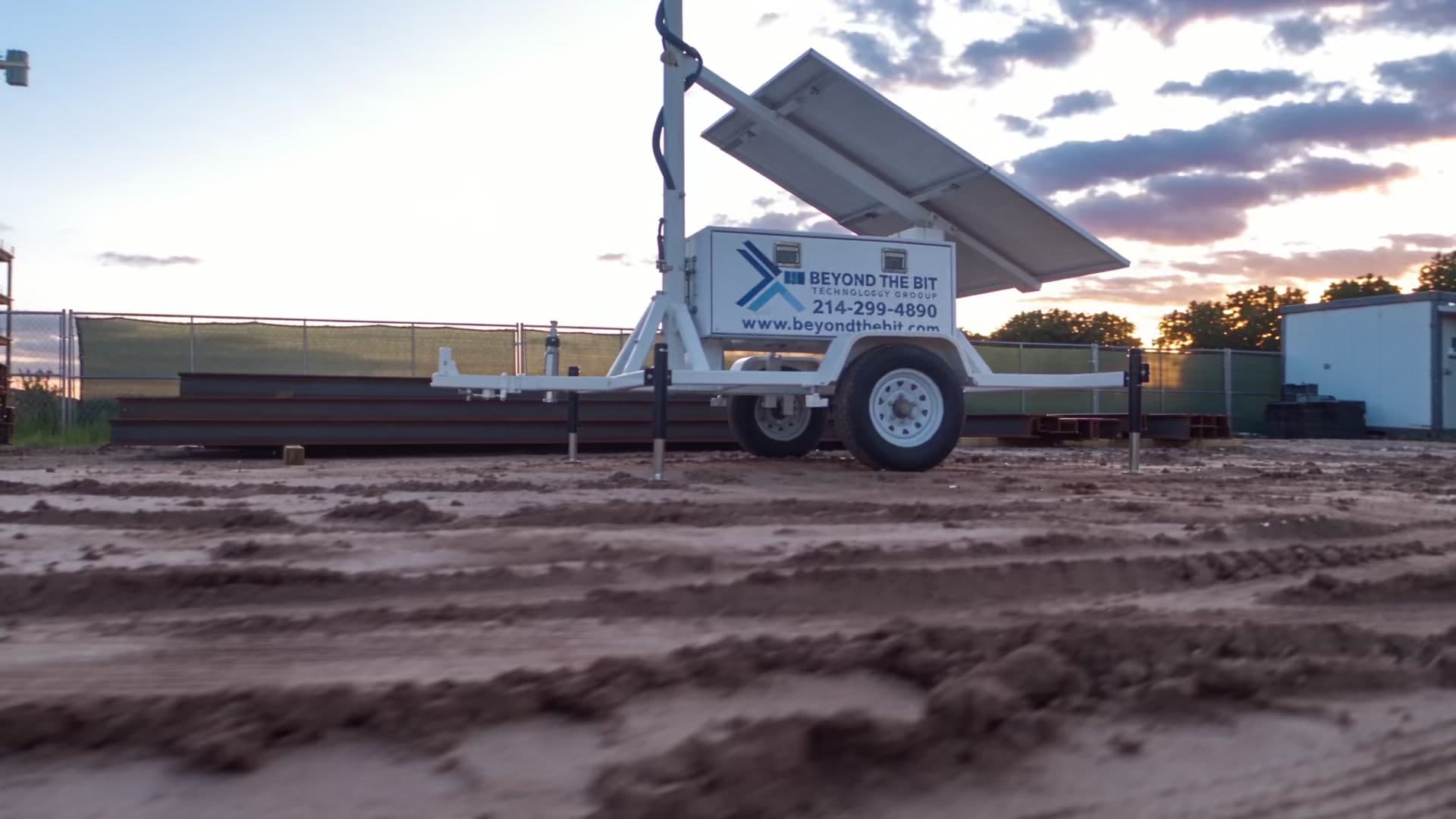
None of it needs site power or a data drop. Dual solar panels and a battery box keep it running, and it connects over cellular, so it works on a raw pad before temporary power is even set — which is usually exactly when a site is most exposed.
Field Placement
Positioned at the gate or laydown yard, mast covering the material staging area and equipment row; moved as the site phases change.
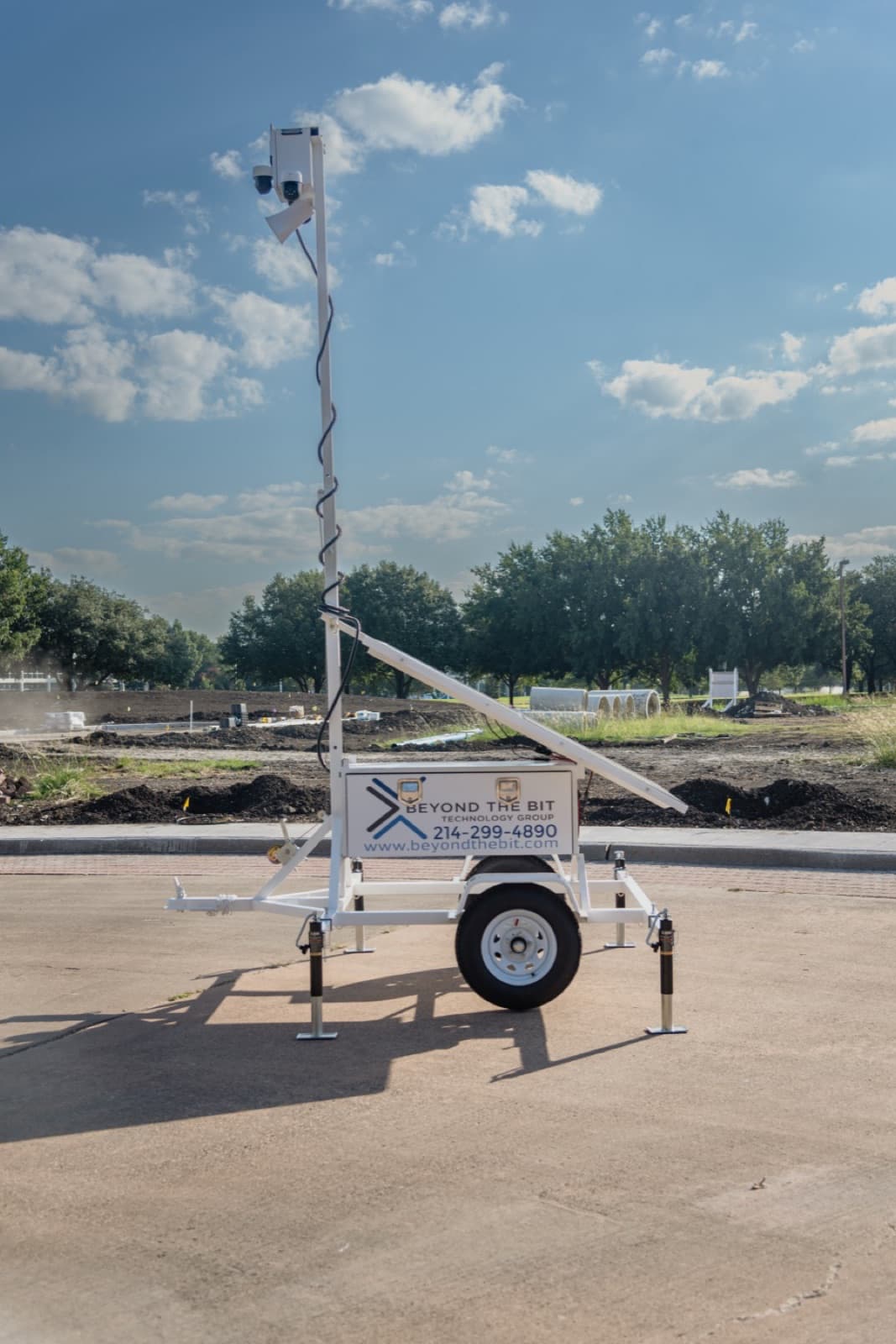
Field Photo — 2025 Deployment
Placed inside the perimeter fence with the mast head clear of the stacked material. Trades keep working around it; the unit does not need power, trenching or a foundation.
Plate 03 — On site, mast raised
Procurement
Who signs off on a security trailer on a construction job?
Superintendents and project managers are the ones who spot the exposure and make the call, but the cost usually lives under General Requirements alongside fencing, temporary toilets, and jobsite trailers — not under a security or IT budget most GCs don't carry on a build like this.
Vendor paperwork is the same as any other subcontractor packet: W-9, certificate of insurance with the additional-insured language your PM requires, and net-30 terms once the quote is signed. If your project needs a specific vendor form before a PO gets cut, send it with the quote request and it comes back filled out, not negotiated.
Multi-unit orders are normal, not the exception. A fleet of nearly 100 trailers means a ten-unit order across a multi-phase site or a portfolio of active jobs doesn't wait on equipment — we've staged units on 18-wheelers and set several sites in a single day when a project called for it.
Get a quote for your jobsite →
or call 214-299-4890
Provenance
Built by people who've sat in your trailer meetings.
This isn't a security company that learned construction from a spec sheet. The team behind Beyond the Bit came out of Texas commercial construction — pulling permits, sitting in OAC meetings, standing in a laydown yard at 6 a.m. counting what wasn't there anymore. We built this because we got tired of writing the same theft report.
That background shows up in where the mast points. We're not guessing at a site's exposure from a satellite photo — we know a gate looks different during mobilization than it does during rough-in, and that the yard that mattered in month one isn't the yard that matters in month four. We've stood in that yard ourselves.
Phase Risk
The risk window moves with the job.
Theft exposure isn't constant across a build — it spikes at specific phases and drops at others. Knowing the curve is how a trailer gets placed instead of parked.
Mobilization
Fencing, trailers, and staged equipment arrive on an open site before there's much material to steal, but idle machines sitting unwatched the first weeks are an easy first target.
Rough-in
The copper window. Wire and pipe run exposed for two to three weeks before drywall closes the walls — the single highest-value theft phase on most commercial jobs.
Slab & framing
The lumber-and-appliance window. Package lumber and rough-in appliances stage ahead of the crews installing them, sitting on an open slab with no walls up yet.
Interior finish-out
Exposure narrows to fixtures, finish materials, and tools staged for interior trades — lower volume than rough-in, but higher value per item taken.
Closeout
Yards thin out, but leftover material, rented equipment awaiting pickup, and temporary fencing still sit exposed until the last truck actually leaves.
That's the placement judgment we bring to every DFW jobsite, including active builds in Dallas. See the full detect-verify-warn-respond chain on How It Works.
Common Questions
Asked by construction buyers.
Can the trailer relocate as the job moves through phases?
Yes. Repositioning a towable trailer to follow the site's exposure — gate during mobilization, laydown yard during rough-in, interior staging near closeout — is a phone call to our crew, not a new install or a change order. Most active jobs move the trailer at least once before the project wraps.
Does this fall under General Requirements or a separate security budget?
General Requirements, the same line item as fencing, temporary toilets, and jobsite trailers. Most GCs don't carry a dedicated security budget for a single build, and treating the trailer as a Gen Req cost is how superintendents and PMs typically get it approved without a separate procurement track.
Can one order cover a multi-phase or multi-site project?
Yes. A fleet of nearly 100 trailers means a ten-unit order across several active jobs or a phased site doesn't wait on equipment. We've staged multiple units on 18-wheelers and set several sites in a single day for GCs running concurrent projects.
Does the trailer need a foreman or site staff to operate it?
No. Once our crew places the unit and aims the cameras with the monitoring center live, it runs on its own — nobody on your team needs to log in, check a feed, or manage a system. Your superintendent's only involvement after setup is knowing who's on the call list if an alert comes in.