
Service Area — Collin County
Watched in
McKinney, Texas.
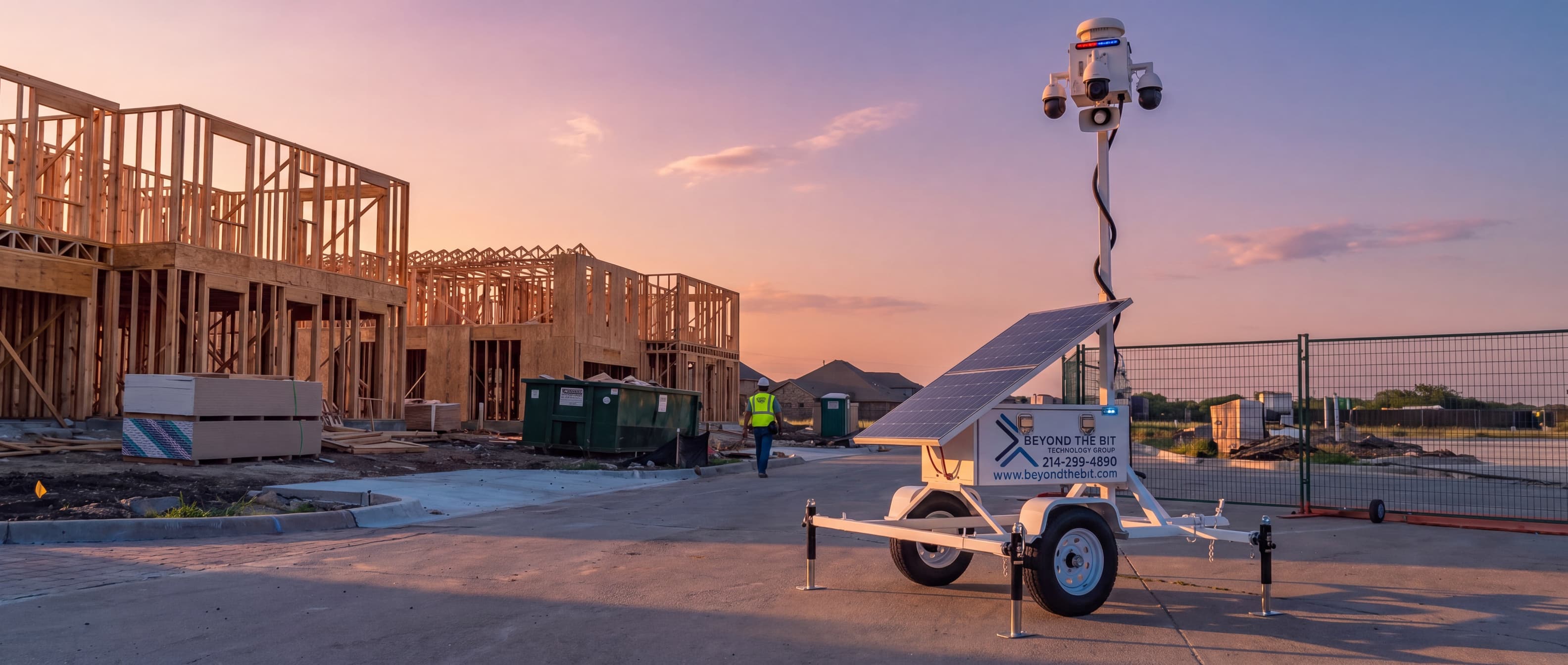
US-380 corridor subdivisions put lumber packages and appliances on open slabs for months at a time — framing lumber delivered a full build cycle before drywall, refrigerators and water heaters staged in garages with no doors yet. That's the exact theft window a camera trailer exists to close, and it's the most common call we get out of McKinney.
US-380, the airport district, Craig Ranch, and downtown infill
The US-380 corridor has been one of the busiest residential and commercial expansion zones in Collin County for years, with subdivision after subdivision breaking ground on what used to be farmland — long stretches of open slabs, framing lumber, and staged appliances with minimal lighting and no permanent security until the homes are occupied. The McKinney National Airport district carries a different kind of exposure: hangar and light-industrial construction near a working general aviation airport, where equipment and material sit adjacent to active flight operations and a fair amount of after-hours vehicle traffic passing through. Craig Ranch mixes established neighborhoods with ongoing commercial and multifamily infill, so newer construction sites sit closer to occupied buildings than a greenfield subdivision would — more potential witnesses, but also more foot traffic that makes an intruder easier to write off as someone who belongs there. Downtown square infill projects are smaller and tighter, historic-adjacent builds on lots where a fence alone looks almost decorative next to century-old storefronts.
Why open slabs are the highest-risk window in residential construction
A framed house with no doors or windows installed is effectively an open building for weeks, sometimes months, and everything staged inside it — appliances, cabinets, fixtures, copper — is fully exposed the entire time. Subdivision-scale McKinney projects multiply that exposure across dozens of lots at once, which is more ground than a single roving guard can realistically cover in a night. A trailer parked at the subdivision entrance or model-home area, with zones drawn around the active phase, catches movement across that whole footprint instead of one house at a time. As the build moves from one phase to the next, the trailer moves with it — no rewiring, no waiting on a permanent system that won't exist until the homes are sold.
Builders lose more to this window than most owners ever see reported, because a lot of it gets written off quietly as a cost of doing business — a pallet of shingles here, a stolen water heater there, replaced out of the schedule float instead of chased down. It adds up across a hundred-lot subdivision the same way small leaks sink a budget. A camera watching the active phase, with a live operator who can call out anyone walking a lot after hours, turns that quiet cost back into something worth stopping before it happens rather than replacing after.
Getting a trailer onto your McKinney site
McKinney runs about 25 minutes from our Richardson yard. Typical deployment is 1–2 weeks from signed quote to a trailer on site, and for subdivision-scale projects that need coverage to follow the build through multiple phases, our crew repositions the unit as the site changes instead of treating placement as a one-time setup. W-9, certificate of insurance, and net-30 terms are standard for us — send them with your quote request if your builder needs a vendor packet cleared first. One flat monthly rate covers the whole rental, including repositioning the unit as the active phase moves.
Field Photo — 2025 Deployment
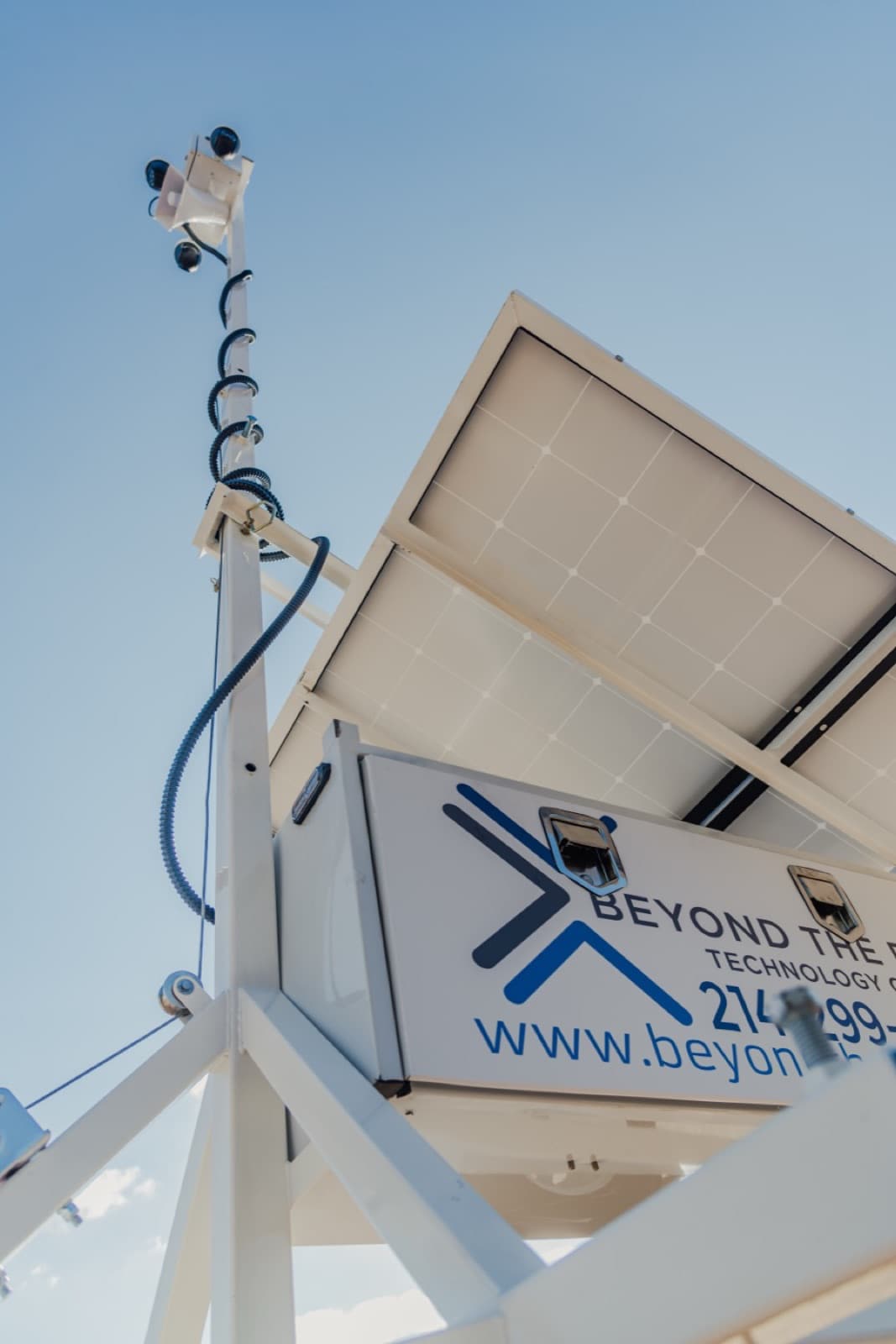
From under the tongue. Roughly fifteen feet of mast puts the cameras above stacked material, site trailers and most perimeter fence, with the panel underside just below.
Plate 06 — Mast, from the tongue
Where These Trailers Work
Common McKinney deployments.
Watching a site in McKinney? Call 214-299-4890
Questions — McKinney
Asked before booking.
Can a security trailer move as a McKinney subdivision build progresses through phases?
Yes. As a build moves from framing to finish work across different lots or sections, our crew repositions the trailer and its detection zones to match — there's nothing to rewire since the unit is fully self-contained on solar and cellular data. That flexibility matters most on subdivision-scale projects where the active theft risk moves every few weeks, and it's included in the same monthly rate.
What gets stolen most often from McKinney home construction sites?
Framing lumber, staged appliances, and copper pulled during rough-in are the most common losses on open-slab residential builds. All three sit exposed for weeks before a house has doors, which is the window our cameras are built to cover with live, video-verified monitoring rather than a recording reviewed after the fact.
Ready to get a trailer on your McKinney site? Get a quote built around your actual site.
Request a Free Site Assessment