
Industry — Car Dealerships
Car Dealership Security Cameras
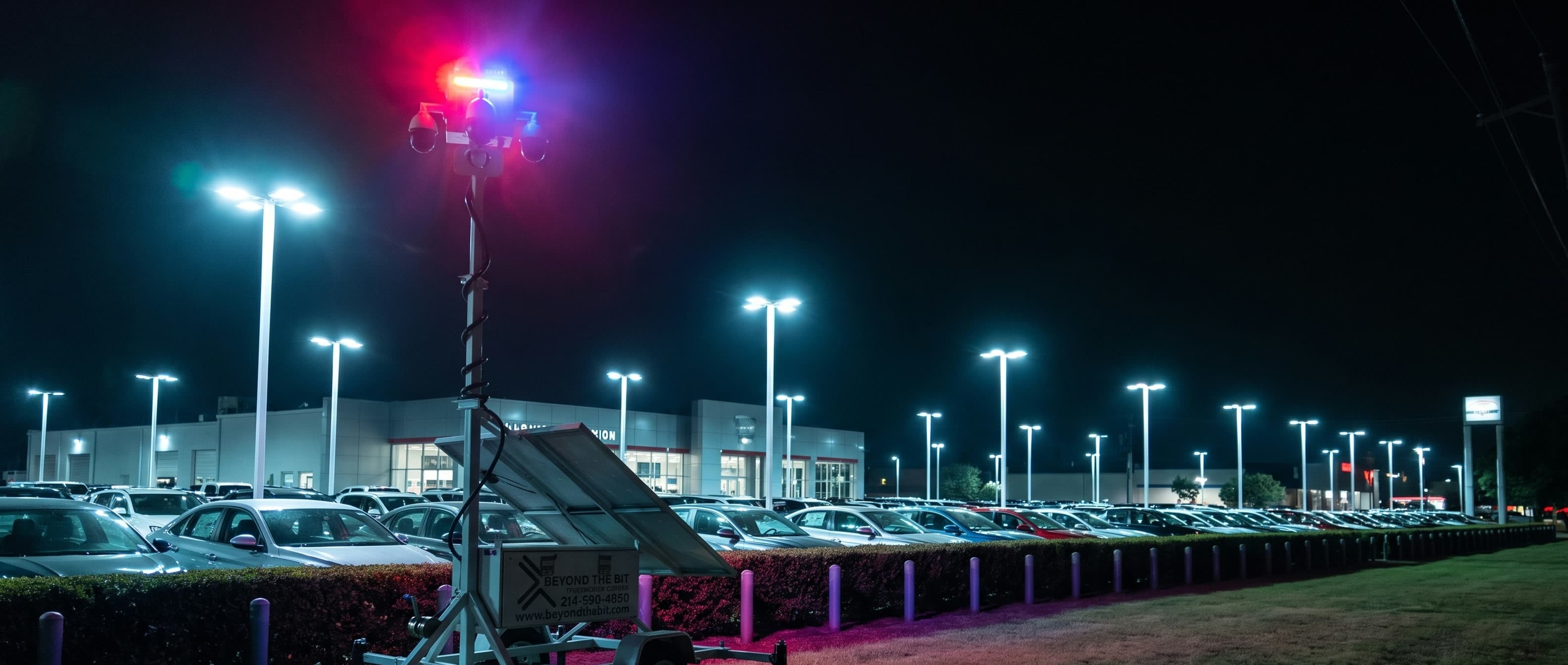
A dealership lot is inventory sitting outside, in the open, all night, every night. Catalytic converters go missing off an entire row in the time it takes one crew to walk the lot with a battery saw. Wheels come off new inventory on display stands. A set of keys walks out of the showroom and a car walks out behind it. None of that requires a broken fence — it requires nobody watching. This trailer puts a live set of eyes and a loud voice on the lot after the sales team goes home.
Exposure
What actually gets hit on a dealership lot overnight?
Dealership theft is fast and specific. A crew with a battery-powered saw can strip catalytic converters off a dozen cars in one pass down a row before anyone hears a thing. Wheels and tires come off new inventory sitting on display stands. Keys taken from a showroom or a night drop turn into a car driven straight off the lot. Test-lot vandalism rounds out the rest of the loss column.
Catalytic converter theft across whole rows overnight
A battery-powered reciprocating saw takes a converter off in under two minutes, and a row of similar vehicles means a crew can work down the line without needing to move their truck. Trucks and SUVs sitting higher off the ground are the easiest targets.
Wheel and tire theft off new inventory
New inventory staged on display stands or blocks is an easy strip job — wheels and tires come off faster than they went on, and a set taken off four cars in one visit is a bigger loss than most single break-ins on the lot.
Key-and-drive-off burglaries
A forced showroom door or a compromised key box turns into a vehicle driven off the lot outright, not just parts taken. That's a total loss on the unit, not a repair bill and an insurance claim.
Test-lot vandalism
Cars set aside for test drives sit apart from the main inventory rows and get less attention after hours, which makes them a target for keying, broken glass, and other vandalism that doesn't need a tool beyond what someone's already carrying.
Deployment
Where does the trailer sit on a dealership lot?
The trailer positions to overlook inventory rows and the service drive, the two places where a night's worth of loss actually happens. On a large lot, that often means the mast goes up somewhere central enough to see multiple rows at once rather than one edge of the property, and it can reposition again if inventory shifts to a different part of the lot after a delivery.
Live audio is what makes this different from a camera that just records. When motion is verified, an operator can key the trailer's speaker and call out directly — a voice announcing that someone's on camera and being watched turns a quiet, unattended lot into one that's clearly being answered in real time.
It runs independent of the dealership's building systems. Solar power and cellular data mean it keeps working during a power outage, before a new lot's utilities are connected, or on an overflow lot across the street from the main building.
Field Placement
Overlooking inventory rows and the service drive; live audio warnings turn a quiet lot into an answered one.
Field Photo — 2025 Deployment
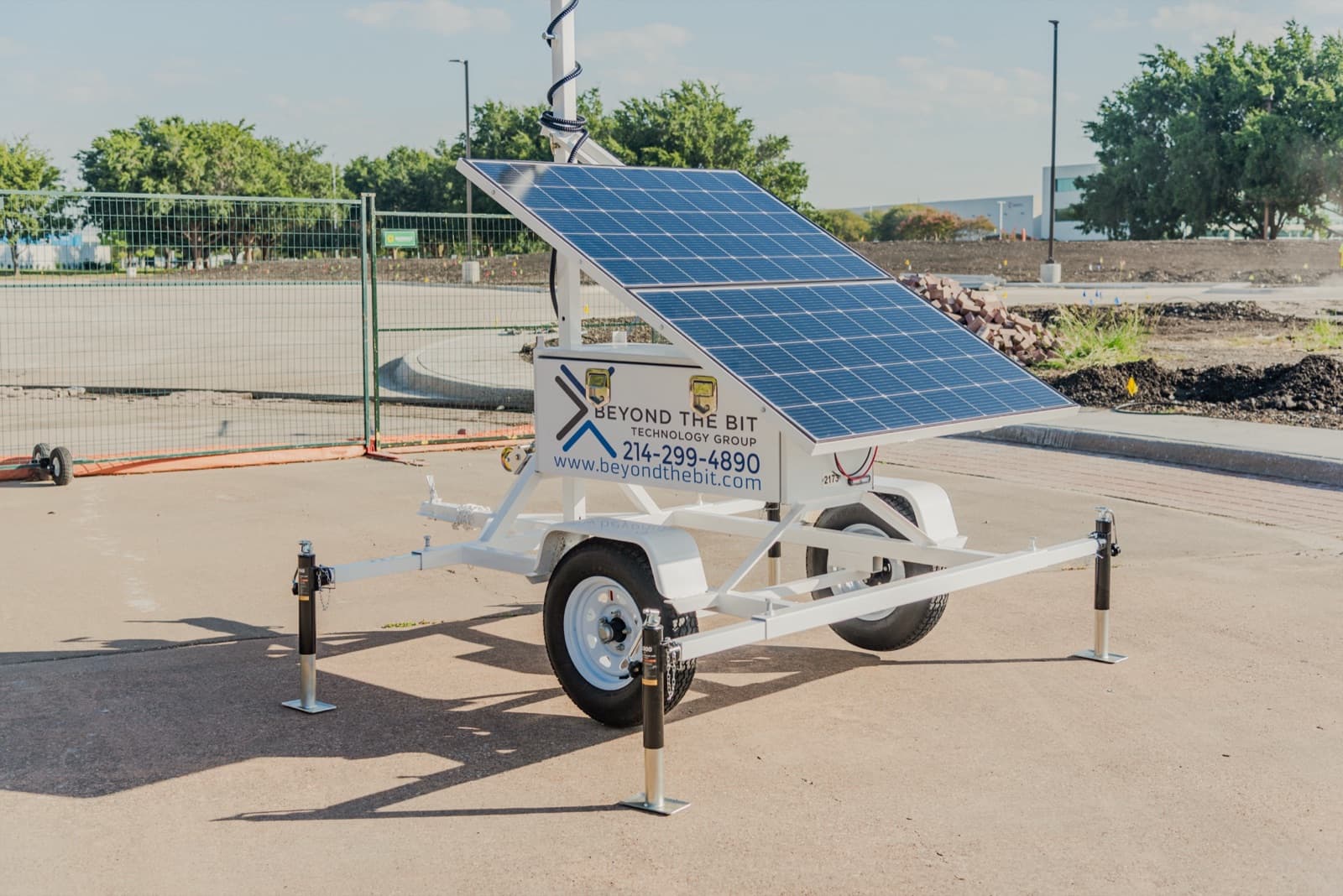
Tongue, axle, two-section array and the equipment cabinet in one frame. Single axle, levelled on four drop-leg jacks once it is spotted.
Plate 02 — Chassis, three-quarter
Procurement
Who signs off on trailer rental for a dealership?
General managers and fixed-ops directors are the usual buyers, since inventory shrink and vehicle losses land directly on numbers they're accountable for at month-end.
Vendor setup follows standard dealership procurement: W-9, certificate of insurance, and net-30 terms are all standard, so it moves through the same approval path as any other lot vendor without a special exception.
Multi-lot dealer groups run one account across locations. A group with several rooftops can cover them all under a single relationship, with trailers assigned per location as inventory levels and past incidents dictate.
or call 214-299-4890
Common Questions
Asked by car dealerships buyers.
Does the audio warning actually deter someone mid-theft?
Yes, in most cases. A strobe firing and a live voice calling out through the trailer's speaker tells whoever's on the lot they're being watched in real time, not recorded for later — and most people leave before finishing what they came to do.
Can one trailer cover a full inventory lot?
It depends on the lot's size and layout. A single trailer with a raised mast covers a meaningful stretch of rows; larger lots or multiple rooftops typically run more than one trailer, positioned so their coverage overlaps at the edges instead of leaving a gap.
How is this different from the dealership's existing lot cameras?
Existing lot cameras usually record without anyone watching live, so an incident gets discovered on the recording the next morning. This trailer adds a live operator who verifies activity as it happens and can respond immediately — audio warning, call list, police when it's real — instead of after the fact.
Can the trailer move if we open a new lot or add an overflow location?
Yes. Repositioning a towable trailer to a new or overflow lot is a phone call, not a new install, so coverage follows inventory as a store adds locations or shifts vehicles between lots during a remodel or expansion.